-
What exactly does a Weir slurry pump do that a standard pump can't?
-
Are rock weirs and movable weir hydraulic cylinders related to Weir pumps?
-
What about well pumps, gas pumps, and can crushers? Does Weir make those?
-
Why does the brand name matter when selecting pumps?
-
How do I know I'm getting genuine Weir parts—not knock-offs?
-
What does the warranty actually cover for mining pumps?
-
Should I prioritize pump efficiency or durability?
-
What's the biggest mistake buyers make when specifying a slurry pump?
-
Final thought (not a question, but worth saying)
If you're sourcing pumps or valves for mining or mineral processing, you probably have a list of questions a mile long. But based on what I see come through quality reviews every week—I oversee compliance for a heavy equipment supply chain—the questions most buyers ask aren't always the ones that save them money or headaches later.
So this is a no-nonsense FAQ. Not the marketing version. The version you'd get if you sat down with someone who's seen what happens when specs are off by a millimeter or a mis-specified pump costs a shift of production.
What exactly does a Weir slurry pump do that a standard pump can't?
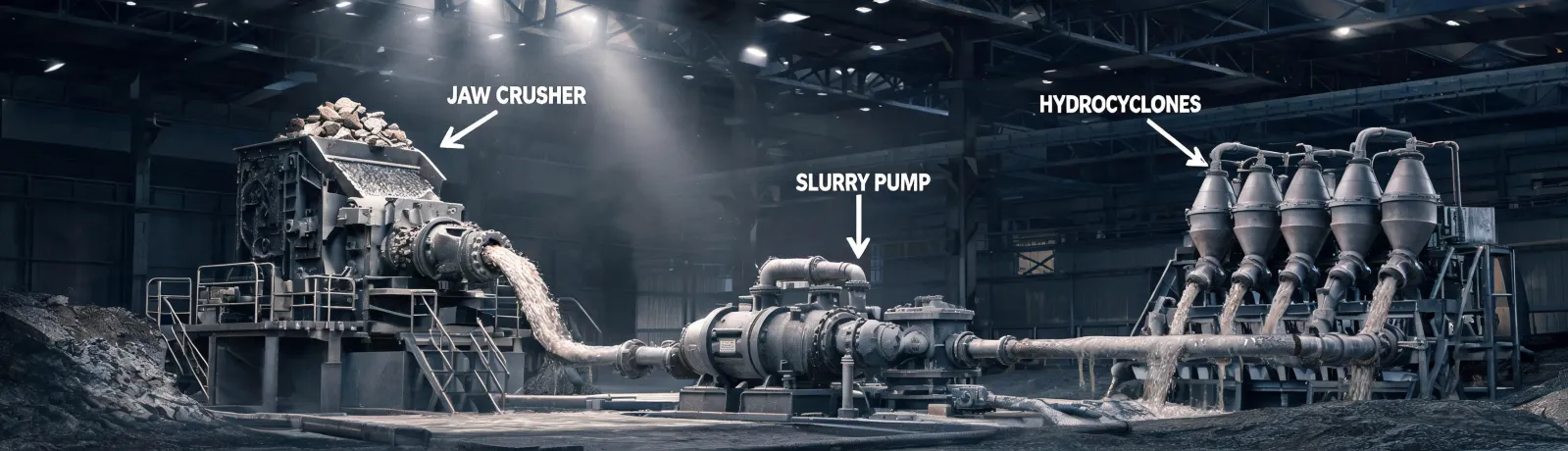
This is the first question everyone asks—and the easiest to oversimplify. A standard pump moves clean fluids. A Weir slurry pump—like the Warman® series—moves fluid that's basically liquid sandpaper. It's designed to handle abrasive, high-density mixtures with large particles. The difference isn't just the motor; it's the materials. Hard-metal liners, heavy-duty impellers, and casing designed to withstand erosion.
It's tempting to think that any industrial pump can handle slurry if you just run it at lower speed. But that ignores the failure mechanism. Standard pumps wear out at the impeller and volute in hours or days. A properly specified slurry pump lasts months to years.
Are rock weirs and movable weir hydraulic cylinders related to Weir pumps?
I get this question a lot—likely because of the shared name. A rock weir is a hydraulic structure for flow control in rivers. A movable weir hydraulic cylinder is an actuator used to adjust those structures. Neither is a product Weir manufactures. Weir the company specializes in industrial pumps, valves, and downstream processing equipment for mining and minerals.
The confusion is understandable. (Should mention: we once had a client ask if we supplied rock weir design services—took a while to untangle that one.) If you're looking for heavy-duty slurry handling, you're in the right place. If you need a river control structure, you need a civil engineering firm.
What about well pumps, gas pumps, and can crushers? Does Weir make those?
No—and this is an important distinction. A well pump moves groundwater from a borehole. A gas pump dispenses fuel. A can crusher compacts aluminum. None of these are Weir products. Weir's core is slurry transfer, mill discharge, and process pumping in mining and mineral processing plants.
I once had a buyer ask if our slurry pump could handle gasoline (ugh). No—and don't try. Those applications require specific materials and certifications. Our pumps are engineered for abrasive mining slurries, not clean fluids or fuels. If you're shopping for well or gas pumps, look at dedicated manufacturers for those niches.
Why does the brand name matter when selecting pumps?
Most buyers focus on specs—flow rate, head pressure, materials—and completely miss the parts and service ecosystem. A pump is only as good as the support behind it. Weir has a global network of parts centers and service technicians. That means when a pump fails at 2 a.m. on a shift, you're not waiting two weeks for a replacement impeller.
The question everyone asks is 'what's the unit price?' The question they should ask is 'what's the total lifecycle cost including downtime and parts availability?' I've seen a cheaper pump cost a mine $22,000 in lost production waiting for a back-order part. The premium pump paid for itself in three months.
How do I know I'm getting genuine Weir parts—not knock-offs?
This is a real risk in the mining space. Counterfeit or 'alternative' parts that claim to be compatible can damage equipment and void warranties. In our Q1 2024 quality audit, we rejected 8% of first deliveries from a new supplier because their claimed 'ISO-compatible' seals didn't meet our standard dimensions.
Key verification steps:
- Check the part number against Weir's official catalog.
- Request a certificate of authenticity from an authorized distributor.
- Inspect packaging—genuine Weir parts have specific labeling and barcodes.
What does the warranty actually cover for mining pumps?
A standard warranty covers manufacturing defects for a specific period—typically 12-24 months from installation. But what most buyers ignore (unfortunately) is the wear parts exclusion. Impellers, liners, throat bushes—these are considered consumables. They wear out from normal operation and aren't covered.
So glad I double-checked this once before approving a purchase order. Almost assumed everything was covered. The contract clearly excluded wear items. Now every specification I review includes a line item for expected wear life and replacement cost per year.
To be fair, this is normal across the industry. No pump manufacturer can guarantee a wear part won't erode when you're pumping sand. But understanding the distinction upfront avoids nasty surprises at warranty claim time.
Should I prioritize pump efficiency or durability?
Ideally both—but if you have to choose, durability wins in mining. A highly efficient pump that fails every three months costs more in downtime than a less efficient one that runs for two years straight. That said, modern Weir pumps like the Warman® MCR® (Mill Circuit) series balance both: the hydraulic design minimizes wear while maintaining efficiency.
Switching to a properly specified pump cut our client's turnaround from 5 days to 2 days on a critical mill discharge application. The automated wear monitoring system eliminated the manual inspection errors we used to have. Efficiency isn't just about kilowatts—it's about uptime.
What's the biggest mistake buyers make when specifying a slurry pump?
The single most common error: underestimating the solids content and particle size. A buyer sees a pump curve and assumes the fluid behaves like water. But a slurry with 40% solids by weight has dramatically different viscosity and settling characteristics.
I ran a blind test with our engineering team: same pump spec with water vs. a dense slurry. The water test showed flow at 85% of design—acceptable. The slurry test showed flow at 53% because the solids settled in the casing. The vendor quoted 'within industry standard'—we rejected that batch and demanded a pump with a larger impeller and different clearances.
Moral of the story: get a slurry specialist to review your application data. That's where a weir pump engineer adds value—not just selling you a box with a motor.
Final thought (not a question, but worth saying)
This FAQ format means you can jump to what matters to you. But if I had to leave you with one piece of advice: specify for the wear, not the peak flow. The best pump in the world running at 70% capacity for 10,000 hours beats a marginal pump running at 90% for 4,000 hours.
Oh, and always verify the impeller material matches your application. Weir offers hard metal, rubber, and ceramic options. The wrong choice can cost you—I've seen it. (Dodged a bullet on that one myself once.)