Why I Wrote This Comparison
I'm a quality and compliance manager at an engineering company that sells industrial pumps and slurry equipment. I review every package before it goes out—about 200 unique items per year. In 2024, I rejected 9% of first deliveries because of missing documentation, wrong impeller trim, or parts that didn't match the approved drawing. In 2025 so far, that number is 7%. Not because manufacturers are bad. Because spec compliance is hard.
Search for “weir” and you'll quickly see why. You'll get a mining pump company, a furnace replacement weir for a humidifier, the Candace King Weir Foundation, and a dozen sump pump listings. If your actual question is “which sump pump should I buy?”, that keyword mess makes it harder, not easier.
So this is a side-by-side comparison between an engineered Weir-brand sump pump and a budget utility sump pump. I'll keep the sales pitch out of it and give you what an inspector actually looks at.
The Comparison Framework
We're looking at five dimensions:
- Performance data
- Materials and expected service life
- Spare parts and support
- Total cost of ownership
- Documentation and accountability
If you're looking for a furnace replacement weir, stop here. That's a small plastic trough that controls water flow over a humidifier pad. It's a simple part, but the same rule applies: check the exact part number before you order. A warped weir will cause dry spots; a wrong sump pump will just cause frustration.
Dimension 1: Performance Data
Here's the thing: two pumps can look identical on a store shelf and perform completely differently in the field. A budget sump pump might say “1 HP” on the box, but the published performance curve—if there is one—isn't always backed by a test date.
An engineered Weir sump pump package comes with a certified test report. Flow, head, efficiency, NPSH, vibration. You know exactly what you're getting. I've rejected pumps where measured performance was 8% under the nameplate ratings. The vendor said it was “within industry standard.” We sent it back anyway.
It's tempting to compare pumps by horsepower and pipe size. That ignores impeller trim, clearances, and material. Identical specs from different vendors can result in wildly different outcomes.
I should add: a certified test report isn't just paper. It's the evidence that what you ordered is what arrived. Without it, you're trusting a label.
Dimension 2: Materials and Service Life
A budget sump pump is usually fine for clear water and occasional duty. You'll see stamped aluminum housings, plastic impellers, and a motor that's happy to run for an hour at a time. That works.
Everything I'd read said premium options always outperform budget options. In practice, that's true only when the premium option matches the application. A high-chrome industrial pump is overkill for a few gallons of clear water an hour.
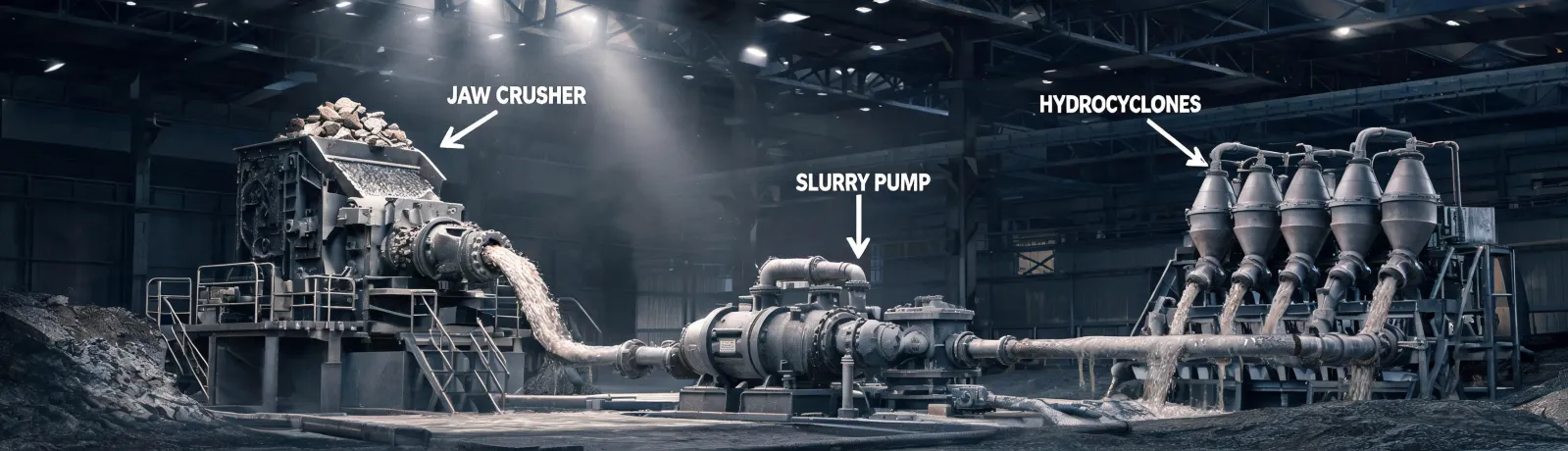
But if the water has grit, sludge, or runs 24/7, materials matter. Weir pumps use high-chrome iron or rubber linings, heavy-duty shafts, and bearings sized for continuous service. That's the difference between a pump that lasts a decade and a pump that fails at the most inconvenient possible moment.
What I mean by “most inconvenient” is usually the middle of a storm, when the basement sump pit is full and every minute counts. That's the wrong time to learn the pump's motor was never sealed properly.
A good way to prevent that failure is to test the discharge line before installation. At our shop, we use a Milwaukee air compressor with a regulator and water separator to blow out lines and check for leaks. If you're doing this on-site, don't skip the water separator—moisture in the air line can shorten the life of seals before the pump even starts.
Dimension 3: Spare Parts and Support
This is where the comparison stops being close.
When a budget sump pump fails, you throw it away and buy another. That's the business model. If it's under warranty, you deal with returns. If it's not, you're back at the store.
An engineered Weir pump, on the other hand, has a parts network designed for mines, treatment plants, and remote sites. As of January 2025, common wear parts are typically stocked at the Weir Parts Center, with lead times closer to a week than a month—but verify current lead times for your region. Wear liners, impellers, shafts, seals—most of it can be replaced without pulling the whole pump. In 2024, one of our customers got a replacement throat bush delivered to a mining site in five days through the Weir Parts Center. Try doing that with a box-store sump pump.
Five minutes spent verifying spare-part availability is the cheapest insurance you can buy. That's the “prevention over cure” principle I've built my whole inspection process around.
Dimension 4: Total Cost of Ownership
Now for the uncomfortable part.
A budget sump pump might cost $450. An engineered Weir pump package might cost $4,800. If you compare sticker prices, the budget pump wins. Not even close.
But here's the thing: a failed pump in a critical application isn't just a $450 replacement. It's the cleanup, the downtime, the after-hours call, the concrete cut to access the pit, and sometimes the replacement of whatever was damaged by the water. A quality issue that started as a “cheap pump” decision cost one of our customers a $22,000 redo a few years back. The pump itself was the smallest part of the bill.
The “buy cheap and replace twice” thinking comes from an era when field labor was cheaper and downtime didn't matter as much. That's not the world we're in now.
Does that mean you should never buy a budget sump pump? No. For a residential basement with a backup pump, sure. But if the pump is doing a job your business depends on, total cost beats unit cost.
Dimension 5: Documentation and Accountability
This is the one nobody thinks about until something goes wrong.
A budget pump usually ships with a one-page manual and a receipt. That's enough if all you need is a pump in a pit.
An engineered Weir pump arrives with more: certified test curves, material certificates, installation instructions, and an O&M manual that actually matches the equipment. If you ever need to file an insurance claim or justify a capital purchase, that documentation is gold. An inspector can't sign off on what's not documented. Not ideal, but that's the reality.
The “Weir” Word Problem
Are you smarter than a 5th grader? If so, you probably know a weir is a kind of dam or overflow structure. The word also shows up in a furnace replacement weir (a humidifier part), in the Candace King Weir Foundation (a private foundation name), and in the name of an engineering company that makes pumps.
These are not the same thing. I can't speak to the foundation's grant-making, and I can't help you match a humidifier part number. But if you're comparing sump pumps, ignore the keyword noise and look at the five dimensions above.
And if you got here looking for a Milwaukee air compressor, you're in the wrong corner of the internet. But while you're here: a good compressor with a filter/regulator kit will make your pump testing way more reliable than a bare compressor with no moisture separation. That's a lesson learned the hard way.
Which Should You Choose?
I'm not going to end this with “the Weir pump is better, full stop,” because it isn't always.
- Choose a budget sump pump if you're handling clear water, you have an alarm, and a second pump nearby.
- Choose an engineered Weir sump pump if you're handling slurry, grit, continuous duty, remote sites, or downtime that equals lost money.
- Choose the right furnace replacement weir if you're servicing a humidifier. Don't try to adapt a sump pump.
One caveat: my experience is based on about 200 industrial pump packages a year, mostly for mineral processing and water management. If you're a homeowner with a wet basement, the industrial parts-network argument doesn't apply. Buy the pump that matches the job, but make sure the spec sheet is real.
Bottom line: verification is the most underrated tool in the maintenance toolkit. Five minutes of checking before you order can save you five days of correcting after you install. That's not a slogan. That's the pattern in every year's inspection logs.