I'm a procurement manager at a 200-person industrial company. I manage a maintenance budget of roughly $500,000 a year. One of the first things I learned is that when water stops moving, everyone blames the pump.
In Q2 2024, the process water line at our plant started acting up. Flow was down, pressure was erratic, and the plant manager's first call was to me: 'We need a new water pump.'
I get it. When water stops moving, you blame the pump. It's the part that makes noise. But after four days of testing, the pump was fine. The real problem was upstream, behind a concrete weir wall that had been eroding for months.
That's the thing about water systems. The visible symptom is rarely the actual failure. Everyone sees the pump. Nobody sees the weir.
What Is a Weir, Really?
A weir controls flow. It can be a concrete weir wall in a treatment basin, a metal plate in a mining slurry line, or a plastic flap in a skimmer. They all do the same job: manage water over or around an edge. And they all fail quietly.
An engineer once told me that a weir is the cheapest piece of hydraulic infrastructure you'll ever own, and the easiest to forget. He was right. It's just a wall with water flowing over it. No moving parts. No warning light. So it sits there until the day it doesn't.
Over the past six years of tracking every invoice and work order, I've noticed a pattern. We don't pay for the first crack. We pay for the damage the crack causes.
- Concrete spalls off a weir wall. Nobody notices.
- Water starts flowing around it, not over it.
- Flow distribution changes. A pump downstream starts cavitating.
- Someone replaces the pump. The new pump fails.
It's the same reason people search for 'water heater replacement weir.' What they usually have is a broken skimmer weir in a pool or basin. Air gets pulled into the line, the heater short-cycles, and someone assumes the heater is dead. The heater is fine. The weir is the problem. A $15 part ends up looking like a $1,500 replacement quote.
The Problem Is Usually Upstream
Here's the part I keep coming back to: the pump vendor didn't know about the weir. The concrete contractor didn't know about pump hydraulics. And I almost made it worse by trying to manage both.
Concrete weir walls aren't just decorative edges. They set the water level, keep sediment moving, and protect downstream equipment. When a wall erodes, the water doesn't go where it's supposed to. That affects everything from pump suction to chemical dosing to the temperature of a closed loop.
In mining, the problem is worse. Slurry is abrasive. The concrete erodes in layers. You inspect it in February and the edge looks okay. By June, the aggregate is exposed. By September, the wall is undercut and chunks are sitting in the pump sump.
No one intends to ignore it. It's just submerged. Out of sight, out of mind.
When I audited our 2023 spending, I found that 18% of our maintenance budget went to emergency repairs of water system components. Not planned replacements. Emergencies. And in nearly every case, the emergency was caused by a small failure that had been ignored for at least two maintenance cycles.
I have mixed feelings about emergency contractors. On one hand, they charge premiums that feel like robbery. On the other, after watching how much chaos a broken weir causes, I understand why the premium exists.
What It Actually Costs
Let me walk through the money, because that's my job.
In Q2 2024, I had three options for the failed concrete weir wall:
- Replace the pump again - $8,500 quoted, with the same underlying risk.
- Repair the concrete weir wall - $14,200, with a 10-day shutdown.
- Temporary steel plate - $4,800 'quick fix' that might last six months.
I almost chose the steel plate. The upside was $4,800 and no downtime. The risk was a partial failure in a month, during our peak production. I kept asking myself: is saving $9,000 worth potentially losing a week of production? The expected value said the steel plate was fine. The downside felt like a career risk.
Looking back, I should have made the call to shut down and repair the concrete wall immediately. At the time, the steel plate seemed like the rational choice. It wasn't. It lasted four months. Then it failed, took out the new pump impeller, and we ended up paying $18,700 for a repair that should have cost $14,200.
Why the Cheapest Quote Is Almost Never the Cheapest
Real talk: I almost bought the cheap pump too. The quote came in $3,200 lower than the Weir slurry pump we eventually installed. But when I calculated total cost of ownership, the cheap pump had a shorter lifespan, higher energy draw, and weaker parts support. Over five years, the 'cheap' option was actually $4,100 more expensive.
Here's the thing: a water pump is a promise. It moves a certain volume at a certain pressure. If the supply side is broken, the pump doesn't matter. I once had a rental yard try to upsell me to a Denali truck when I asked for a temporary water pump. Nice truck. Completely useless for moving 1,000 gallons per minute. Right tool, wrong job.
Look, I'm not going to publish a 'how to drive a forklift' article, and I don't want a pump vendor repouring our concrete weir wall. Specialists have limits. The vendor who said 'this isn't our strength—here's who does it better' earned my trust for everything else. I'd rather work with a specialist who knows their limits than a generalist who overpromises.
The Fix: Stop Buying Parts. Start Fixing Systems.
What fixed our system was not a single purchase. It was a sequence:
- Inspect the entire water path, not just the pump.
- Repair the concrete weir wall with a proper mix, not a patch.
- Replace the pump impeller and wear rings.
- Add a routine check of weir edges and flow levels.
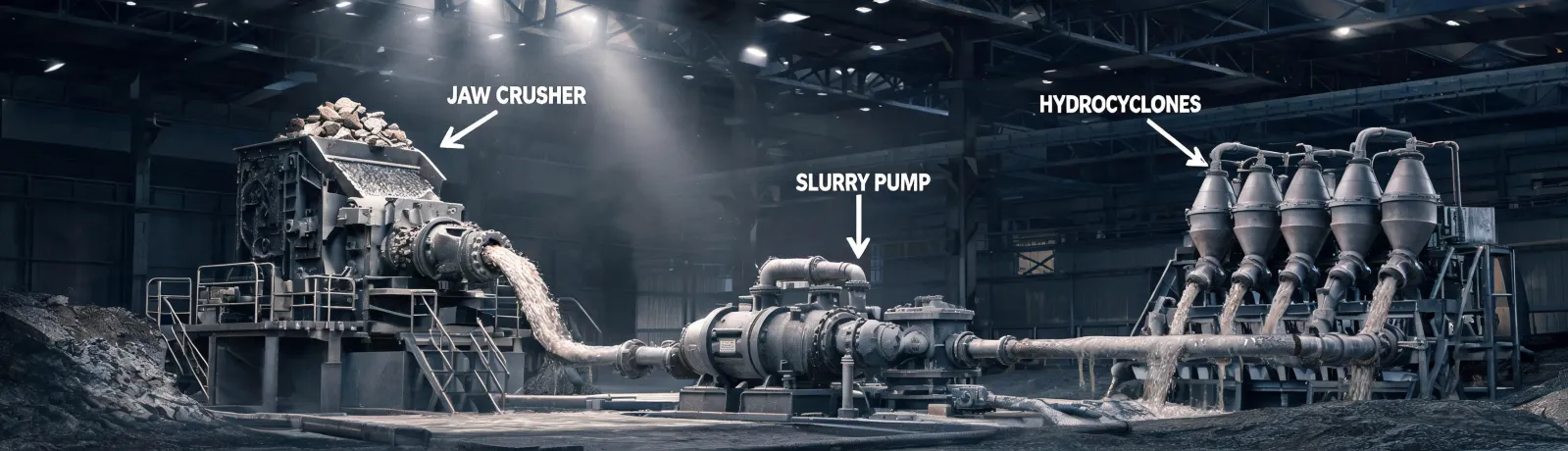
The pump we used was a Weir slurry pump. It handled the abrasive fines without clogging. But the Weir rep didn't pretend to know anything about concrete forms. He recommended a structural contractor. That boundary was the most valuable part of the conversation.
Total cost was about $22,000. The alternative—ignoring the weir and replacing pumps every year—was going to be $30,000 in the first year alone. I don't have a fancy study to quote. But the Hydraulic Institute's Pump System Assessment Guide says the same thing in more polite language: most pump problems come from the system, not the pump. In our case, the system problem was a concrete weir wall that had been failing for months.
Bottom line: before you buy a water pump, check the weir. Before you pay for an emergency repair, ask what caused the failure. And before you trust a vendor who says they can do everything, ask them what they won't do.
That question might save you more than any price quote ever will.