Mill Discharge Reliability Plan
Impeller clearance checks, casing-liner wear measurement, gland-water audit, vibration baseline and critical wet-end spares staged before the next shutdown window.
Mill discharge, classification, dewatering, crushing and screening each create a different failure profile. WeirFlow Mining builds service scopes around the actual process constraint rather than a generic maintenance calendar.
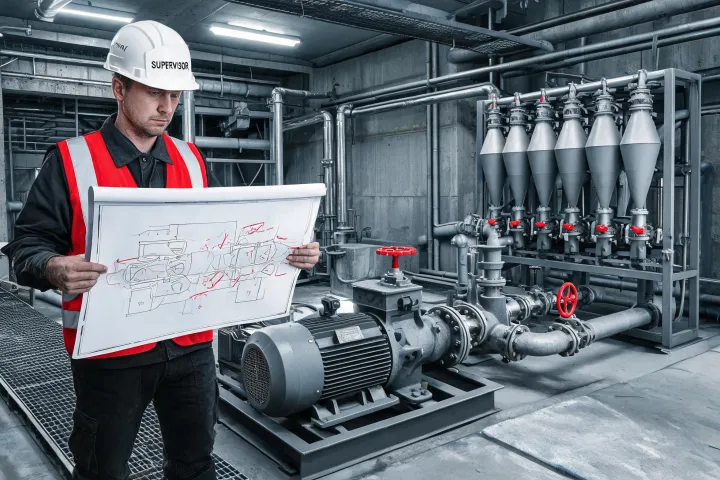
Impeller clearance checks, casing-liner wear measurement, gland-water audit, vibration baseline and critical wet-end spares staged before the next shutdown window.
Feed-pressure survey, apex and vortex finder inspection, manifold balance review and d50c calculation to stabilize overflow size and reduce circulating-load drift.
Jaw plate profile tracking, cone liner change-out hold points, closed-side setting verification and pre-packed bolt, backing and lifting consumable kits.
Screen-media selection, spray bar inspection, pegging and blinding review, deck-angle notes and panel change sequencing for aggregate and mineral circuits.
Long-line head calculation, pipe-wear review, seal water availability check and emergency bypass recommendations for abrasive or chemically variable tailings.
Criticality ranking, consignment stock, expediting paths and inspection documentation so the plant team can close the job with a traceable technical file.
Yes, when contract terms allow it. We normally begin with a reliability overlay: duty review, inspection sheets and critical spares. That avoids a disruptive handover while giving your team a second engineering opinion.
For priority accounts we target an engineering response within 24 hours, then match the site to the nearest parts path. The realistic dispatch plan depends on wet-end material, shaft frame, seal style and any import restriction.
Yes. Training normally includes safe isolation, clearance measurement, gland-water pressure, start-up observation and the failure modes that show up as vibration, excess leakage or lost head.
Yes. WeirFlow Mining covers the connected process chain: pump duty, cyclone behavior, crusher liner life and screen efficiency. That is useful when a bottleneck migrates between equipment classes.
A useful service plan should say which measurements matter, which parts must be staged, what the field engineer will verify, and what documentation closes the job. Share the equipment class, ore type, current bottleneck and next shutdown date so our team can route the inquiry correctly.