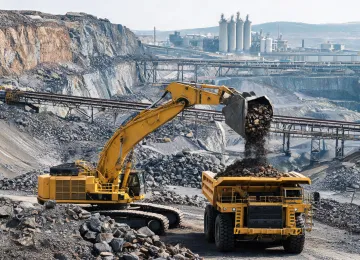
Ore Extraction
Ore variability, moisture and particle shape are captured before pump and crusher assumptions are locked.
WeirFlow Mining ships, services and rebuilds equipment for slurry movement, hydrocyclone classification, crushing, screening, dewatering and tailings transfer so project teams can connect process risk across the whole plant.
Ore variability, moisture and particle shape are captured before pump and crusher assumptions are locked.
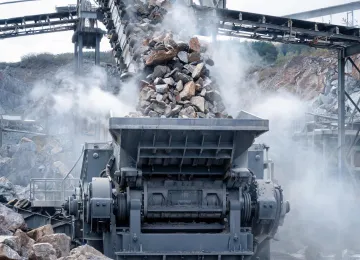
Jaw plate profile, feed distribution and closed-side setting form the first wear-control checkpoint.
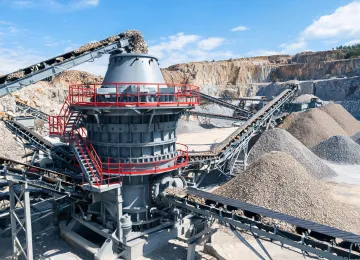
Cone liner life is monitored against product shape, tramp events and downstream screen loading.
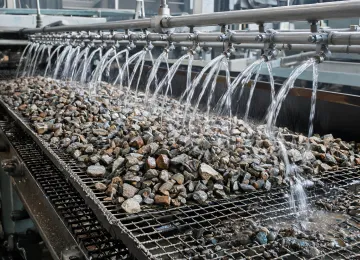
Deck angle, media style, spray condition and blinding risk are matched to throughput expectations.
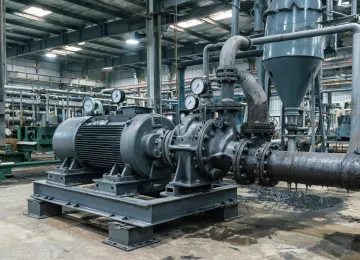
Pump duty points are reviewed against actual solids SG, pipeline head and seal-water availability.
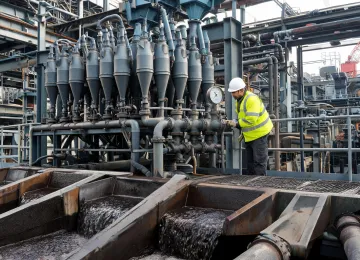
Apex, vortex finder, feed pressure and overflow density are treated as connected operating variables.
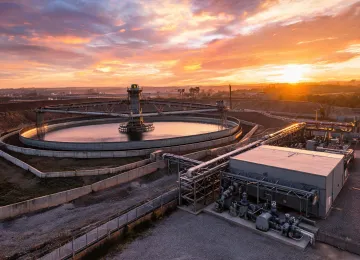
Long-line pumping, pH variation and pipe wear are reviewed before spare parts are specified.
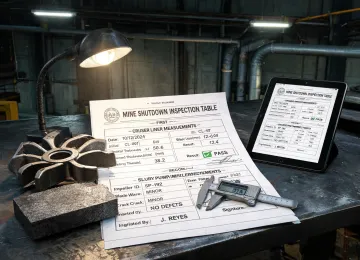
Inspection records, torque sheets, oil samples and parts registers close the maintenance loop.
A single purchase order does not automatically create a reliable plant. Reliability comes from linking observations: the ore feed, the crusher setting, the screen condition, the slurry pump duty point, the cyclone pressure and the next available shutdown. WeirFlow Mining gives plant teams a common language for those links, which helps maintenance, processing and procurement make the same decision from the same evidence.
Mining and aggregate buyers regularly debate which process route best fits the orebody and the site. WeirFlow keeps both sides on the table - the equipment supplier should not collapse the debate into a single recommendation when the operating context is what actually decides.
Standard for sulphide concentrators and fine-particle iron beneficiation. Flotation and wet magnetic separation deliver higher recovery on sub-75 µm material. Requires 1.5-3 m³ make-up water per ton plus tailings dam capacity. Slurry pumps, cyclones and thickeners dominate the equipment list.
Used in arid regions or where tailings storage is constrained. Dry magnetic separation can recover strong-magnetic iron at competitive grade; air classification handles coarser cuts. Penalty: fine-particle recovery (sub-100 µm) drops 5-15% versus wet route.
WeirFlow position: we will not recommend a process route on equipment-vendor preference alone. The water permit, tailings storage horizon and downstream metallurgy are the deciding inputs - the customer's environmental and metallurgical lead must sign off, not the supplier.
Tolerates high-abrasion hard rock (Mohs 6-9, UCS 200-400 MPa). Lower wear cost per ton on granite, basalt, iron ore. Reduction ratio 4:1 to 6:1, jaw opening 600-1,500 mm. Cubicity is poor; downstream secondary crushing is mandatory for asphalt-grade aggregate.
Produces cubical product (flakiness below 15%) suited to high-spec asphalt and concrete. Reduction ratio up to 20:1 in single stage. Limitation: blow-bar wear cost rises sharply on hard, abrasive feed (silica above 40%); recommended Mohs 4-6.
WeirFlow position: hard, abrasive feed and mining duty - jaw plus cone. Limestone or recycled concrete with strict shape and gradation specs - impact crusher with screen recirculation.
The proposal makes the boundary conditions visible so process, maintenance and procurement work from the same evidence.