What I Thought Was the Problem
In 2020, I became the person responsible for buying pumps and replacement parts for a 150-person engineering company. My instructions were simple: get the best price, hit the delivery dates, and keep the engineers happy. It took about a week to discover that I couldn’t even name what I was buying.
My first request was for a “weir door replacement.” I typed it into Google, clicked the first few results, and saw swimming pool skimmer parts. I sent a quote to the engineer anyway, feeling proud of my speed. His reply began with “No, not that kind.” He then explained, very slowly, that he meant the weir door on a Weir Minerals slurry pump. I didn’t know what a slurry pump was. I didn’t know what a weir was in this context. I was the person in the office who googles “how to use a tongue scraper” while everyone else talks about fluid dynamics. (For the record: use it gently from the back of your tongue to the front, rinse it, done. It has zero connection to industrial pumps.)
That first mistake taught me the surface problem: I was treating industrial equipment like office supplies. Search, compare, order. But pumps are not pens. A water pump can be a tiny circulator under a sink, a condensate pump under an air-handling unit, or a heavy-duty unit moving abrasive slurry in a mine. Without a clear spec, you’re not buying a pump—you’re buying a lottery ticket.
The Real Problem: It’s Not the Search – It’s the Language
The real problem is the gap between what engineers mean and what the rest of us see on a screen.
Take the word “weir.” To a hydraulic engineer, a weir is a barrier that controls water flow. To someone in mining, Weir is also a brand—Weir Minerals—that builds high-wear pumps for abrasive applications. To a pool owner, a weir is the flap that sits in the skimmer. Three different meanings, three different part catalogs. When you search “weir door replacement,” the algorithm can’t read your mind. It serves you the consumer version, and only after you click around do you realize it was the wrong universe.
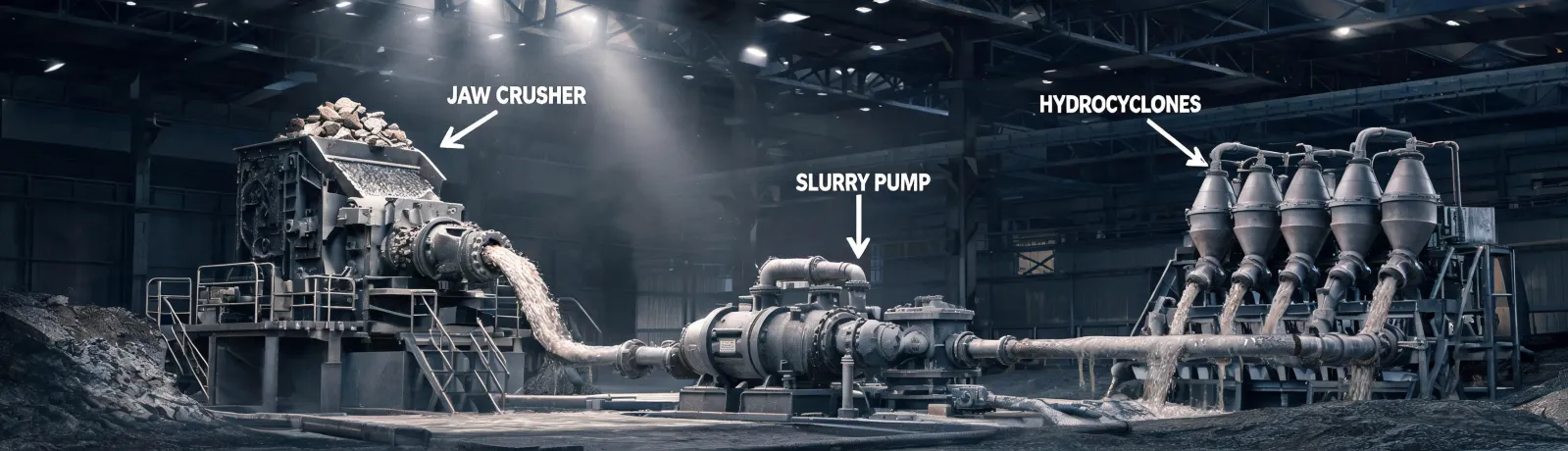
That ambiguity isn’t the end of it. Even when you know the brand, the technical details are dense. The first time I looked at a Weir Minerals slurry pump spec sheet, I saw terms like “impeller diameter,” “shaft seal,” and “elastomer options.” I had no idea which one mattered for the application. So I did what any sensible admin would do: I called the manufacturer. The response was polite, but the agent asked for a pump serial number or model code. I had neither. I just had a picture from the engineer that looked like a big metal creature with pipes attached.
I’ve learned that this is not unusual. According to the Hydraulic Institute (pumps.org), a pump must be selected based on hydraulic conditions—flow rate, total head, and the nature of the fluid. Those are the fundamentals. But to a non-engineer, those words are the same as “specific gravity” or “NPSH”: they’re a secret vocabulary. Vendors often assume you already know them. They aren’t trying to be unhelpful; they’re just used to talking to people who speak the same language.
The worse part is what happens when you’re a small buyer. I’ve emailed with questions and gotten no response—from multiple companies. I’ve been handed a catalog and told, “look through this and tell us what you need.” I’ve had distributors say they only work on quotes over a certain dollar amount. That approach ignores the fact that a $200 order in a small company is not the same as a $200 order in a corporation. It’s still an important decision for that business.
And here’s the twist: being small often means you need more support, not less. A big buyer might have a technical team on site to handle the spec sheets. A small buyer has a purchasing admin with a browser and a deadline. The market’s tendency to ignore small buyers is not just a service gap—it’s a safety gap. If the wrong replacement weir is installed, it can fail, and industrial failures are not like returned packages. They can cause injuries and serious damage.
What Guessing Costs You (and Your Reputation)
In 2023, I ordered what I thought was the right water pump for a client’s washdown system. The price was $450, delivered in three days. It was a standard clear-water pump. The site needed a slurry pump—or at least a pump with a tougher wear-resistant casing. The pump died within a week, and the cleanup cost us a $2,800 maintenance call and two days of lost operation. The engineer who trusted me didn’t say much, but I could feel the trust dropping.
That was one of my more spectacular mistakes, but not the only one. I’ve ordered condensate pumps with the wrong voltage, and replaceable weir doors with the wrong mounting holes. Each mistake followed a pattern: I was too embarrassed to ask for help, so I guessed. And the guesses were wrong more often than they were right.
Let me put a price on it: a restocking fee of 20% on the part, plus several hours of internal time chasing paperwork, plus whatever it costs for the engineer to have the wrong part sitting on the floor. I’ve also seen invisible costs—a late shipment that stops a project, a pump that can’t handle the fluid and leads to a safety review. In industrial purchasing, cheap can cost you far more than money.
This is why I no longer believe that the issue is just a broken search result or a confusing website. The deeper issue is that people like me—non-engineers, small buyers—are often forced into a guessing game. And the game isn’t fair. When you’re responsible for a $600 condensate pump and you don’t know if it’s supposed to have a cast iron body or a bronze impeller, the stakes are real. If you make the wrong call, you don’t just waste $600. You waste weeks of other people’s time.
What Actually Works: Stop Searching, Start Asking
After five years of trial and error, I’ve settled on a simple method: don’t start with a search engine. Start with a supplier that can hold your hand.
When I need a Weir Minerals slurry pump, I go to the manufacturer’s website or an authorized distributor. I send them the model number from the old unit, a photo of the nameplate, and a list of process requirements. I ask them to confirm the impeller size, motor voltage, and connection type. I ask until I understand the answers, and I don’t feel bad about it. Every question answered is one fewer risk of a reorder.
For a weir door replacement, I now ask whether it’s for a pool skimmer, a concrete weir structure, or a piece of mining equipment. If it’s industrial, I’ll ask for material certification and a laser scan if necessary. The same logic applies to condensate pumps and water pumps: don’t just order the cheapest generic item; verify that the pump’s flow, pressure, and material compatibility fit the application. Most reputable suppliers—including the people at Weir Group, which, according to their website (weirgroup.com), maintains a global parts and service center network—can help you with that, if you give them a chance.
Small doesn’t mean unimportant. It means you have less room for error.
One more thing, and I’m serious: if you’re a supplier reading this, please don’t treat small orders as beneath you. That $300 quote request might come from someone like me, who is spending the company’s money carefully and needs your expertise just as much as your product. Treat that customer with respect and you may keep them for decades. For buyers: don’t be afraid to ask “dumb” questions. The only truly dumb purchase is the one you make on a guess.
And if you’re here because you genuinely wanted to learn how to use a tongue scraper? I’ll spare you the industrial talk. Use it after brushing, gently, from the back of your tongue to the front. Rinse it off when you’re done. And please don’t click on any pump ads on that page. That’s how you end up reading an article about Weir Minerals slurry pumps instead of finishing your morning routine.