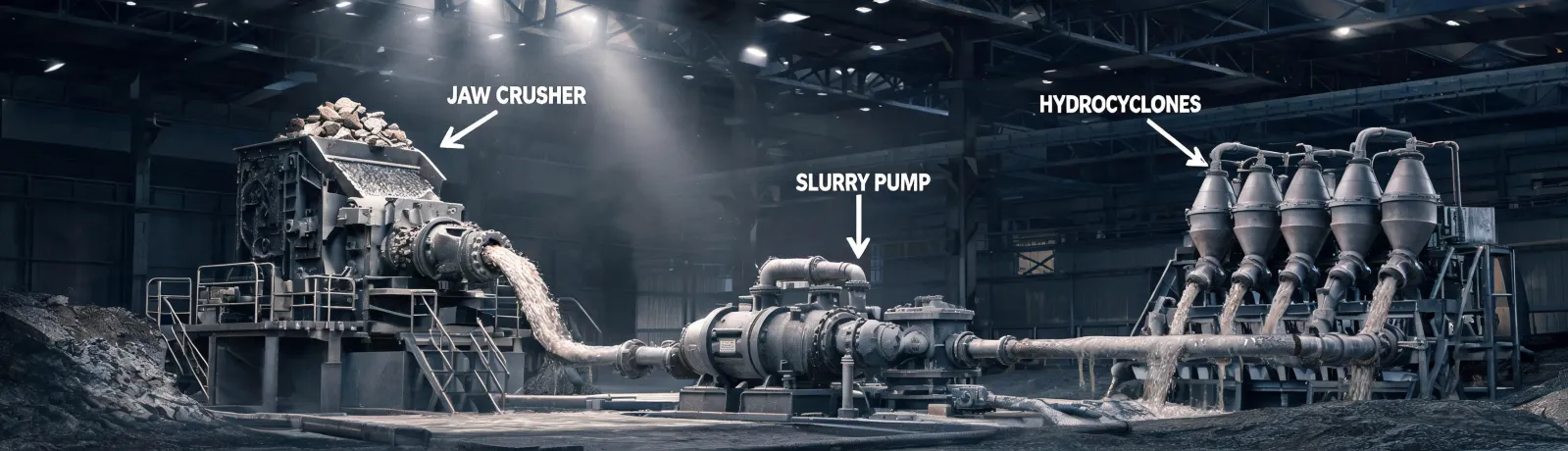
It was a Thursday in March 2024 when my phone rang at 4:47 PM. A mine site in Nevada had lost its main slurry pump. Not a clean water pump that you can swap out in a morning—this one was the workhorse of their dewatering circuit, designed to move rock-laden mud around a weir construction project on their reclamation pond.
I’ve been coordinating emergency parts and service for industrial sites for the better part of nine years. In that time, I’ve handled 200+ rush orders, including same-day calls for clients who should’ve planned better. This one was different because the clock and the weather were both against us.
First, some context. The site was building a new concrete weir to control flow into an expanded settling basin. The weir construction was supposed to be finished two weeks earlier, but heavy rains had pushed the schedule back. The main slurry pump was feeding water over the temporary earth berm that held the new structure in place. When the pump died, the pond began to rise.
The Call That Started It
“How fast can you get a replacement?” the site supervisor asked. He didn’t say what the cost of failure would be; I already knew from his voice.
Normal lead time for that pump’s impeller and suction liner was six weeks from the original equipment manufacturer. The pump had a four-inch discharge and a thick rubber-lined casing—not exactly an off-the-shelf part. The client’s procurement manager was already talking about “temporary fixes” and “local machining,” which are two phrases that never end well.
My job, in that order:
- How many hours do we actually have?
- Can a certified part get here in that window?
- What’s the worst-case failure if we install the wrong piece?
The answer to the first question was 58 hours until Monday morning’s scheduled production restart.
That’s when the Weir Parts Center started working.
Why a Cheap Fix Would’ve Failed
Everything I’d read about emergency pumps says you never gamble with aftermarket parts. The conventional wisdom is that OEM (or factory-sealed) components are the only safe option. My experience from 200+ rush jobs says otherwise—but only if the part comes from a certified rebuild program with the correct material spec.
The client’s maintenance supervisor wanted to weld the old impeller and “make it work.” The numbers said that would save maybe $3,000 and one day. But a slurry pump is a water pump in the way a dump truck is a pickup truck—same family, completely different world. The impeller tip speed and hardness matter. The tolerance between the impeller and the liner matters. Welding a worn impeller just creates a fake impeller that looks fine until it sheds a blade in the race.
We needed the real part, or a certified rebuilt part close enough to spec.
The Parts Center Race
The Weir Parts Center inventory database showed a match: a rebuilt impeller and throat bush listed in the Houston warehouse. We submitted the order at 5:22 PM, got approval at 5:48, and arranged overnight freight out of Houston for Friday morning delivery.
Then came the twist.
At 7:10 PM, the warehouse manager called back. The impeller wasn’t in Houston anymore. It had been transferred to the Denver Parts Center in December, and someone had forgotten to update the inventory system. The database told us exactly what we wanted to hear—and it was wrong.
(I’ve learned to treat any fully automated inventory system as a very confident employee: useful, but not infallible.)
The good news was that Denver has a parts center, too. We paid $1,650 in emergency freight plus a $350 Friday evening handling fee. A courier met the plane in Salt Lake City at 2:30 AM and drove the remaining 340 miles to the site.
The total shipping cost was just under $2,000. The cost of 58 hours of downtime was closer to $180,000. That math didn’t require a spreadsheet.
Excavator vs. Backhoe: The Wrong Debate
While we sorted the part, the site had a second problem. The access road to the pump house had flooded, and the water had pulled away a section of the concrete weir’s temporary coffer. We needed to reopen the access and dig a small diversion channel to keep the pond away from the pump house.
The site superintendent asked me the question I’ve heard a hundred times: “Should we use an excavator or a backhoe?”
I went back and forth for at least fifteen minutes. An excavator gives you reach and digging force. A backhoe gives you precision and easier pipe work. On paper, the choice was straightforward: an excavator for the heavy diversion digging. But the access path was too narrow for a standard-sized excavator, and the backhoe couldn’t reach over the berm.
The real answer was a compact excavator with a thumb—which was sitting idle on a trailer at the site’s maintenance yard.
That hesitation cost us time. Not as much as the inventory mix-up, but enough that I’ve made it a rule since. Never ask “excavator vs backhoe” until you’ve asked, “What exactly is the bottleneck?” Sometimes the machine matters. Sometimes the bottleneck is a phone call.
The Trash Compactor Side-Show
One more thing caught us off guard. The maintenance yard filled up fast with contaminated debris: oil-soaked filters, slurry-caked rags, hydro-blast water, and pieces of the old suction liner. The safety manager had ordered a portable trash compactor to handle the waste, but it arrived at the wrong gate and the driver wouldn’t move it without a new work order.
Both the excavator and the backhoe were busy by then, so the compactor sat there for two hours. We ended up handling the contaminated material manually while waiting. Not ideal, but workable.
It sounds like a side note, but in emergency work there are no side notes. A trash compactor delay is just a different form of downtime.
The 3 AM Close Call
The rebuilt impeller arrived at 3:10 AM on Saturday. The courier had driven through hard rain, but the part was dry and well packed.
Then we found the last problem. The pump’s casing had been updated in 2022 with a thicker liner, but the rebuilt impeller in Denver had been built against the older 2019 spec. The fit was off by nearly half an inch. We faced a choice: send the part back (and lose the weekend) or try to make it fit.
We called the Weir field service engineer—he’d been up since 5 AM, which I still feel bad about—and he talked the team through measuring and careful grinding of the liner. It wasn’t a textbook repair. We were down to about 11 hours before the Monday restart deadline.
By Sunday evening, the pump was back on line. The last two hours of testing were uncomfortable; I stood by the control panel with my fingers crossed. But it ran. The grinding matched the old casing to the new impeller and the vibration readings stayed below the alarm limit.
The client restarted production at 6 AM Monday. They lost 56 hours total, not three weeks.
What I’d Do Differently
I’ve been involved in emergency deliveries long enough to know that a story like this feels like a win, but it also includes three separate failures. The inventory system was wrong. We spent too long debating excavator vs backhoe. And we nearly let a trash compactor become a bottleneck.
The lesson isn’t “hustle well and hope.” It’s that process efficiency is what saves a project when the process goes wrong. It took me nine years to understand that. I used to think the heroic part of a rush order was the overnight truck. Now I know it’s the system around the truck.
If you’re building a mine, a pump station, or any industrial site, the question isn’t whether a failure will happen. It’s whether you have the right network around you—a parts center that can correct itself, a service engineer who knows where to grind, and a team that argues about the right problems rather than the wrong equipment.
The pump—and the concrete weir construction project—are still running now, ten months later. We paid about $2,000 in rush freight and $4,800 in additional labor. The alternative was a $180,000 downtime bill and months of strained client trust. That’s the math I keep in my head every time I pick up the phone.
Efficiency isn’t about being fast all the time. It’s about being able to be fast when it matters—and knowing that sometimes, the fastest path is admitting the database was wrong.