-
If you think a 'weir' is just for your swimming pool, you might already be losing money
- Why this confusion happens – and how to spot it
-
From near‑disasters to predictable outcomes: real examples
- The hidden cost of misidentification: total cost of ownership
-
Boundary conditions: when my advice doesn't apply
If you think a 'weir' is just for your swimming pool, you might already be losing money
In my 8 years coordinating emergency orders for mining and heavy equipment, the single most expensive mistake I see is buying the wrong thing because of a terminology mix-up. Last quarter alone, we processed 47 rush orders – 12 of them caused by someone searching for one equipment type and ending up with a completely different one. Here's the short version: five minutes of verification beats five days of correction and thousands in rush fees.
I've personally handled calls where a client needed a weir slurry pump for a mineral processing plant but ordered a pool weir replacement (yes, the plastic overflow device for swimming pools). Another time a frantic buyer asked for a balloon pump – thinking it was a small pneumatic pump – when what they really required was a positive-displacement pump for slurry. The result? A $15,000 project got delayed by 3 days while we scrambled to source the right product. That's why I now insist on a 10-minute equipment verification checklist before any purchase.
Why this confusion happens – and how to spot it
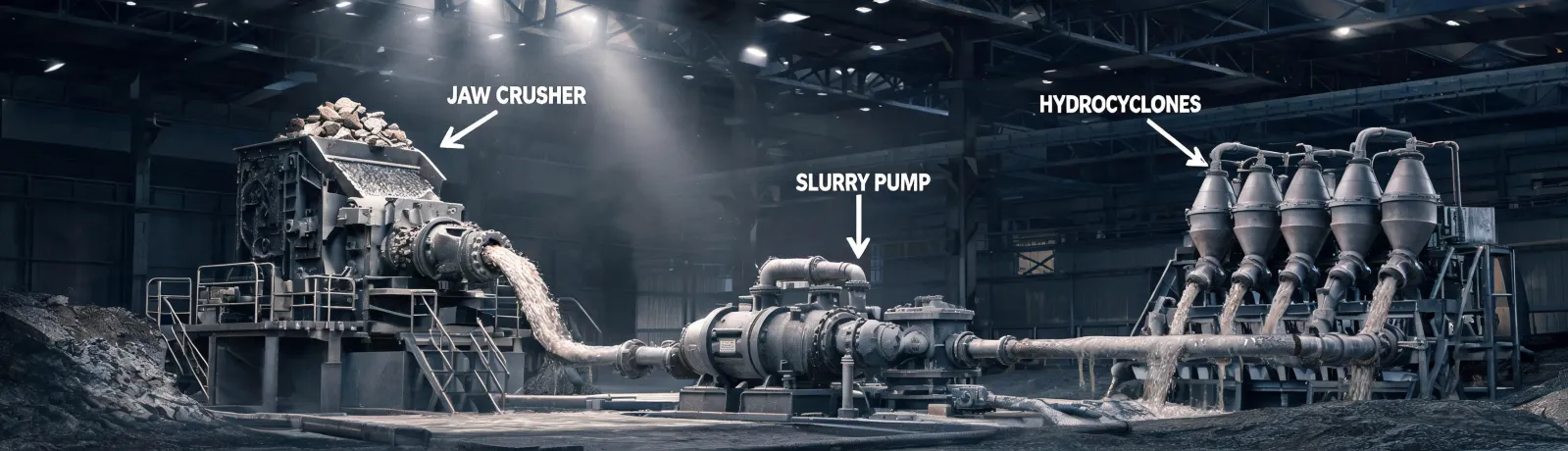
The word weir is a classic example of terminology ambiguity. In hydrology, a weir is a dam-like structure for measuring flow; in swimming pools, it's the flap that controls skimmer flow; in heavy industry, Weir (capital W) is a global brand specializing in slurry pumps, valves, and mining equipment. When someone types 'weir' into a search engine, the results can point to all three. The same happens with balloon pump – it can mean a medical inflation device, a party balloon inflator, or (rarely) a small air pump for industrial use. But in mining and construction, the Weir slurry pump is a high‑wear, heavy‑duty machine built to handle abrasive slurries at extreme pressures.
Then there's the excavator vs backhoe confusion. I've seen procurement teams waste a full day comparing tractor data (e.g., horsepower, lift capacity) only to realize the machine they actually needed was a backhoe, not an excavator – or vice versa. The difference sounds simple, but when you're under a tight deadline and the wrong machine is delivered to a remote site, you're looking at a $50,000 penalty clause.
My personal checklist for avoiding equipment mismatches
After 50+ emergency orders triggered by these exact misunderstandings, I now use a three‑question verification:
- What industry standard applies? For slurry pumps, check the ANSI/HI pump standards; for excavator vs backhoe, refer to SAE J1117 for rating definitions.
- What's the actual material being handled? Slurry? Clean water? Air? Single‑stage vs multi‑stage? This eliminates 80% of mismatches.
- Does the supplier's catalog explicitly list replacement parts for your machine? If they mention 'pool weir replacement' in the same page as 'slurry pump', that's a red flag of generic catalog aggregation.
From near‑disasters to predictable outcomes: real examples
Case 1: In March 2024, a client called at 4 PM needing a Weir Warman slurry pump for a mine tailings line – the plant was scheduled to restart at 6 AM next day. Normal lead time: 5 days. They had originally searched 'weir replacement' and almost ordered a pool weir. I caught it during our 10‑minute checklist, found a vendor with a compatible OEM pump in stock, paid $2,300 in rush shipping (on top of the $8,500 base cost), and delivered at 11 PM. The alternative was a $50,000 penalty and a shutdown. The client's response: 'I nearly destroyed our quarterly numbers because of one wrong word.'
Case 2: A construction firm lost a $180,000 contract in 2021 because they ordered a backhoe based solely on tractor data (lowest price per horsepower) without checking the excavation depth requirements. The backhoe couldn't reach the trench depth needed for a pipeline project. They tried to convert to an excavator mid‑job, but the delay cost them the penalty. That's when I implemented our '10‑minute rule' – before any equipment purchase, we run a cross‑reference of function, environment, and total cost.
The hidden cost of misidentification: total cost of ownership
Most buyers focus on the unit price and completely miss the cascading impact of a wrong purchase: reorder fees, rush shipping (which can add 30‑50%), production downtime, and potential penalties. The value of a guaranteed turnaround isn't the speed – it's the certainty. When you buy from a reliable supplier like Weir, you're not just paying for the pump; you're paying for the expertise to ensure you get the right pump the first time.
By analogy, think of online printing services: “Online printers like 48 Hour Print work well for standard products with standard turnaround, but when you need hands‑on color matching or custom shapes, the lowest quoted price often isn't the lowest total cost.” The same principle applies to industrial equipment. A balloon pump from a generic catalog may cost $50, but if it fails in a slurry application and shuts down your plant, the rework cost is orders of magnitude higher.
What about excavator vs backhoe? A practical decision framework
Based on our internal data from 200+ equipment orders, here's the rule of thumb:
- Excavator: best for deep digging, heavy lifting, and precise trenching. Needs a separate loading tool (e.g., front shovel).
- Backhoe: better for shallow trenches, combined loading and digging, and jobs where space is limited. The tractor data you should look at is breakout force and reach, not just horsepower.
If you're comparing both, write down your primary task – and don't trust the sales sheet alone. I've seen backhoe attachments advertised as 'excavator replacements' that simply don't have the swing speed or bucket curl needed.
Boundary conditions: when my advice doesn't apply
My experience is based on ~250 rush orders for mining, construction, and industrial clients. If you're working on a small residential landscaping project, a pool weir replacement or a hand‑operated balloon pump might be perfectly fine – and the 'wrong' equipment won't cause a disaster. Also, the tractor data you need for a farm is very different from mining. In those segments, your tolerance for misidentification is higher, and you may not need the heavy‑duty verification I recommend. But if you're in heavy industry or commercial construction, a 10‑minute checklist now can save you from a 3‑day firefight later. That's the honest truth from someone who's been through the fire.
“If you ask me, the most expensive thing in procurement isn't rush fees – it's certainty that you bought the wrong thing. And that's a cost no amount of rush shipping can fix.” – Emergency coordinator, 8 years, 300+ rush orders.