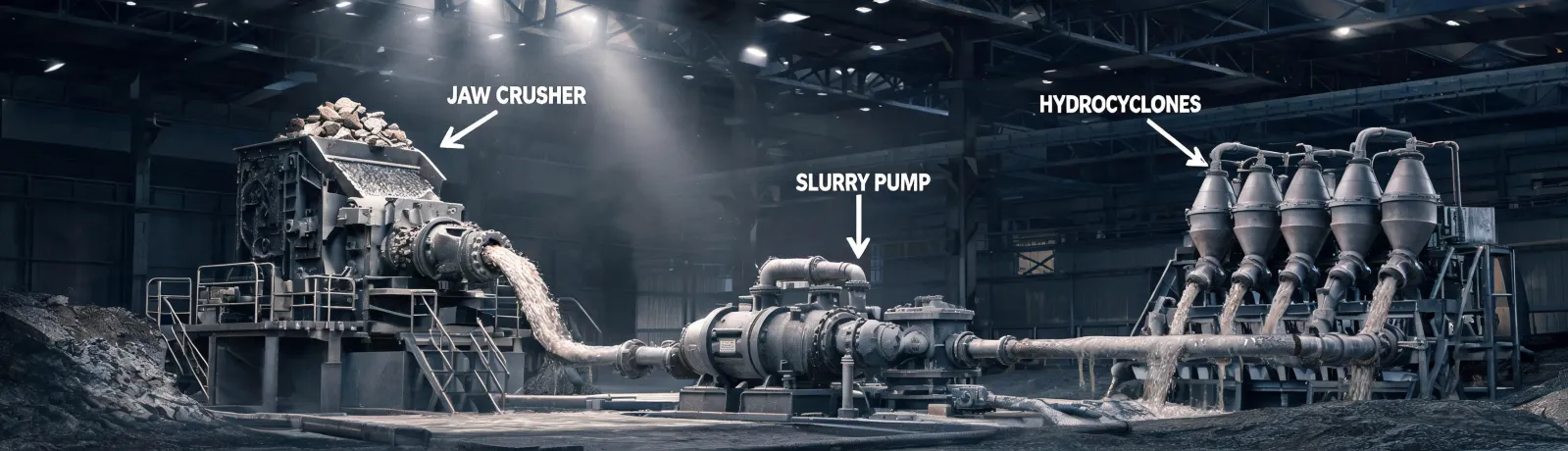
If you're managing a maintenance budget and the word 'pump' comes up, stop. Don't just order the cheapest industrial pump you can find on a search engine. I learned this the hard way. The 12-point checklist I created after my third mistake has saved my department an estimated $8,000 in potential rework. My core conclusion after five years of managing procurement for a mid-sized minerals processing facility is this: The cost of a Weir slurry pump is an investment in operational sanity, not just a purchase. The real money isn't lost on the sticker price; it's lost in downtime, compatibility hell, and the logistics of returns for equipment that isn't fit for purpose.
My title is 'Office Administrator,' but my day-to-day
reality involves ordering everything from office supplies to heavy machinery parts. I manage roughly $200,000 annually across 8 different vendors for our main plant. When I took over purchasing in 2020, I figured a pump was a pump. It moves fluid, right? That kind of thinking cost me a month of headaches and nearly lost my VP's trust.
You see, our operation frequently deals with slurry—abrasive, thick mixtures of solids and liquids. To the untrained eye (and my untrained eye), pump specs look similar on paper. But ordering a standard centrifugal pump when what you need is a Weir Minerals slurry pump is like using a concrete drill bit to carve a turkey. It will fail, spectacularly.
Why 'Standard' Don't Cut It for Slurry (A Costly Lesson)
From the outside, a pump is a pump. The reality is that the metallurgy, the impeller design, and the sealing system for a slurry pump are completely different from a water pump. The numbers said go with the cheaper, more generic option—it was 40% less expensive and had a similar flow rate. My gut said something felt off about the materials list, but I was under pressure to hit the quarterly budget. I approved the order.
It took just 48 hours of operation for the generic pump's casing to start wearing thin. We had to shut down a processing line to swap it out. The resulting downtime cost more than the price difference for a Weir Mining Technology pump for the next year. That unreliable supplier made me look bad to my VP when materials arrived late and the wrong part failed immediately.
When I compared the 'cheap' pump and the Weir pump side by side—after the disaster—I finally understood why the details matter. The Weir unit had a heavier casing, replaceable wear liners, and a shaft seal designed for grit. The generic model? It had essentially painted itself into a corner with thin, non-reinforced metal. 5 minutes of verification on the pump's specifications (specifically the percentage of solids it could handle) would have saved 5 days of correction.
The 'Prevention' Checklist I Use Now (Borrow It)
I know procurement colleagues hate this, but I now insist on a pre-order technical review for any equipment over $1,000. It's not just about price. Here's the checklist I made after my third mistake (ugh, the embarrassment):
- Confirm the Material: Is it just water, or is it a slurry? If it's slurry, are you specifying a Weir slurry pump or a similar heavy-duty model? (Not a general-purpose one).
- Check the 'Wear Parts' Availability: I don't care how good the main pump is if I can't get a replacement impeller or liner without a 6-week lead time. Weir's parts network is a major factor here.
- Demand a 'Duty Cycle' Analysis: Ask the vendor 'How long will this last running 24/7 with [your specific material]?' If they can't give a data-backed answer, that's a red flag.
- Verify Lead Times and Invoice Compatibility: This is my 'admin' advice. I once found a great price on a specialized part from a new vendor. They couldn't provide a proper electronic invoice (handwritten receipt only). Finance rejected the expense report. I ate $2,400 out of the department budget. Now I verify invoicing capability before placing any order.
This was true 10 years ago when the Internet made every supplier look the same. Today, the difference between a vendor who can support industrial equipment and one who is simply reselling is night and day. A quick look at a supplier's engineering resources tells you everything.
The Weir Edge: Service Network & Support
(Frankly, this is where most 'bargain' brands fall apart). At our company, when we had a valve failure in Q3 2022, the ability to get a Weir technician on a call to talk through the issue saved us a full week of downtime. We didn't just buy a pump; we bought access to that expertise.
I get why people go with the cheapest option—budgets are tight, and you just need to get the line running today. But the hidden costs of a failed pump (lost production, cleanup costs, overtime labor) are almost always higher than the premium for a durable, well-supported machine like a Weir Mining Technology unit.
What About a Bench Scraper? (And Other Random Office Purchases)
Managing a purchasing desk is a weird job. One moment you're negotiating a $50,000 order for a plate compactor for the yard, and the next you're buying a bench scraper for the office kitchen. (Pro-tip on the bench scraper: it's not just for baking; it's shockingly effective for cleaning dried glue off a workbench and scraping old tape residue off boxes. How to use it? Flat side down, 45-degree angle, push away from you.)
The same principle applies across all of this, though. Whether you're specifying a concrete drill bit or a heavy pump, you must understand the material you are working with and the environment. Using a standard bit on reinforced concrete is the same mistake as using a standard pump on slurry. It's a breakdown waiting to happen.
The Honest Truth: When a Weir Pump Isn't the Answer
I have to be honest. There are edge cases. If you're pumping nothing but clear water in a low-risk application (like a drainage pond with no solids), a heavy-duty Weir pump would be absolute overkill. The upfront cost and the engineering aren't needed. You're paying for a Ferrari to drive the kids to school.
But for 9 out of 10 applications where you're moving anything more aggressive than tap water—especially in mining, aggregate, or industrial processing—the 'prevention over cure' approach of using a specialized pump like a Weir proves itself every time.
(Disclaimer: Prices for specific pumps vary significantly by model and configuration. A single Weir slurry pump can range from $5,000 to $50,000+ depending on size and material. Always get a quotation based on your specific application. Verify current lead times and availability directly with Weir or their authorized distributors.)
Looking back, I should have asked more technical questions upfront. At the time, I was afraid of looking stupid to the engineers. Now, I know my job is to ask the stupid questions so we don't have to pay for the expensive mistakes. Save yourself the grief. Do the research, buy the right tool for the job, and never assume a 'bargain' pump will handle your slurry.