That First Big Mistake I Watch Others Repeat
Back in 2017, I was handed my first major equipment order for a concrete weir system. It looked straightforward: dimensions checked out, the spec sheet seemed right, and the client needed it fast. I approved it, submitted it, and moved on. Two weeks later we found out the hydraulic actuator calculations were off by almost 30%. The weir couldn't maintain proper flow control under peak load. The entire install had to be ripped out and redone.
That mistake cost us roughly $3,200 in materials and labor, plus a week of project delay. My boss wasn't thrilled. The client wasn't happy. And I still remember the feeling of reading the engineer's report and realizing I had missed something that seemed so obvious afterward.
I've now been handling equipment orders for about 6 years. In that time, I've personally documented over 40 significant mistakes across concrete weirs, weir minerals slurry pumps, and similar industrial equipment. Total wasted budget? Probably north of $15,000. That's a lot of experience I'd rather not have paid for.
The Surface Problem: Specs That Look Right but Feel Wrong
Most people I talk to think the problem is simple: "We just need to match the pump flow rate to the pipe diameter, or match the excavator bucket size to the material density." And sure, that's part of it. But plenty of orders that meet those basic criteria still fail.
The real issue isn't that people don't know the basics. It's that they stop there. They assume if the numbers on paper line up, the equipment will work. What they're missing is the second layer—the one that accounts for wear patterns, surge loads, and site-specific variables that don't show up on a catalog sheet.
The Deeper Cause: We Ignore the Hidden Costs of 'Good Enough'
Here's what I've learned the hard way: the biggest mistakes happen not because someone bought the wrong type of equipment, but because they bought the wrong specification for the actual conditions.
Concrete Weir Case Study
I worked on a site where the client ordered a standard concrete weir based on average flow rates from a nearby river gauge. The problem? The gauge data was from a dry season. When the rainy season hit, the hydraulic load exceeded the weir's design capacity by 40%. The overflow caused erosion on the downstream bank—a problem that required another $8,000 in repairs.
The mistake wasn't the weir design itself. It was trusting a single data point without considering variability. The surprising lesson: you need to design for the worst case, not the average. That's something I didn't fully appreciate until I watched that repair crew break ground.
Slurry Pumps and Hidden Erosion
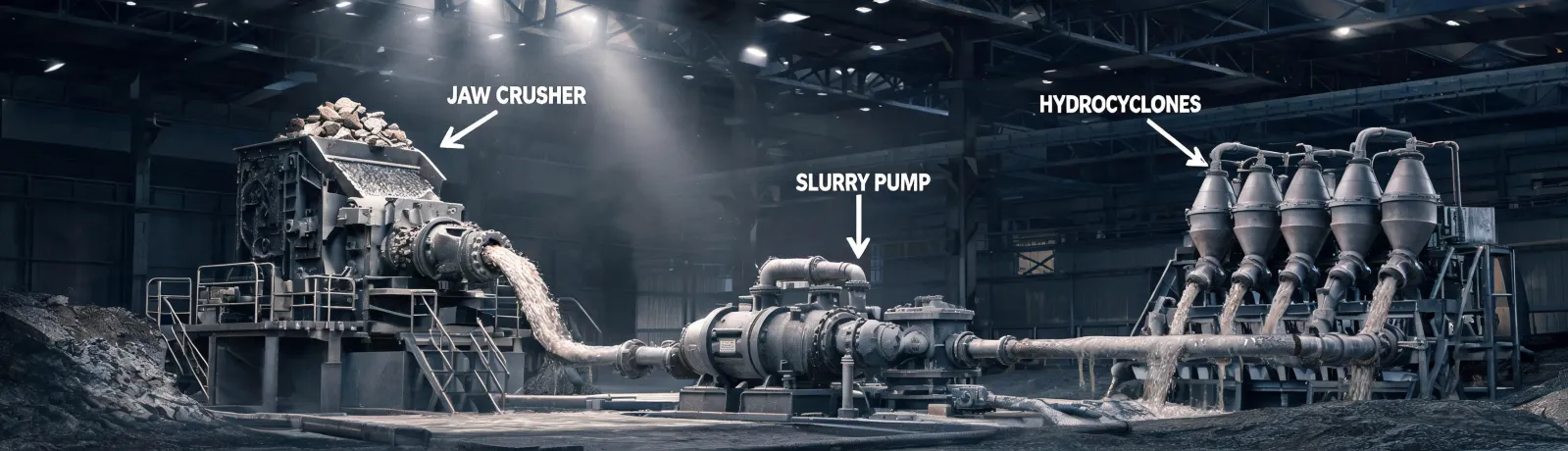
Another time we ordered a set of weir minerals slurry pumps based on a standard duty cycle. The pump curves looked fine—head, flow, efficiency all matched. But after about 8 months of operation, the impeller wear exceeded projections by 200%. Turned out the slurry had a higher silica content than the initial samples showed, and the pump's wear parts weren't rated for that level of abrasion.
The vendor's spec sheet was accurate. Our testing was incomplete. That mismatch cost $1,200 in replacement parts and 3 days of downtime. I still have the worn impeller in my office as a reminder.
Fuel Pumps and the 'Just Fix It' Trap
I've also seen this pattern with fuel pumps—not just in mining but across general industry. Someone buys a standard replacement pump because it's cheaper and available. They don't look at the duty cycle or the fuel composition. A few months later, the pump fails. Suddenly they're dealing with a fuel pump recall-level problem, except it's not a recall—it's a bad spec choice.
The surprise for me wasn't that cheap pumps fail. It was how much more downtime costs compared to the upfront price difference. A $200 savings on the pump can lead to $2,000 in lost productivity and replacement labor. I've got the receipts to prove it.
The Real Cost: It's Not Just Money
Let me be specific about what "cost" means here. It's not just the reorder price or the repair bill. The hidden costs I've tracked include:
- Lost production time: On one site, a poorly specified pump caused a 2-day shutdown while we sourced a replacement. That's roughly $5,000 in lost output.
- Reputation damage: I can't quantify this precisely, but I know we lost at least one follow-on order because the client "heard we had issues." Word travels fast in industrial circles.
- Safety liability: In worst cases, a failing gas pump or hydraulic cylinder can create hazardous conditions. I'd rather eat the cost than deal with an injury report.
- Time wasted on rework: That's time I could have spent designing a better system instead of fixing a preventable mistake.
I wish I had tracked the total cost of these "good enough" decisions more systematically. What I can say anecdotally is that after implementing a proper pre-order checklist, we've caught about 15 potential specs errors in the last 18 months—probably saving $10,000+ in avoided failures.
The Shortcut That Actually Works
So what do I do differently now?
I don't just read the spec sheet; I validate it against actual site conditions. For a concrete weir, that means checking historical flow data (minimum and maximum), not just the average. For a slurry pump, it means testing the actual material composition, not assuming it matches the brochure. For what is an excavator really needed for a site, I look at the ground conditions and digging depth, not just the bucket size.
I also don't try to do it all alone anymore. I involve the supplier's application engineer early—even for small orders. Yes, it takes a bit more time upfront. But it has cut my redo rate by about 70%.
The way I see it, equipment selection is not about picking the right numbers off a menu. It's about understanding the gap between what the data shows and what the site will actually demand. That's the difference between a system that works and one that costs you more than you expected.
If you're making these decisions, I'd suggest treating your spec sheet as a starting point, not a final answer. And if you make a mistake? Document it. The lessons are worth more than the cost.