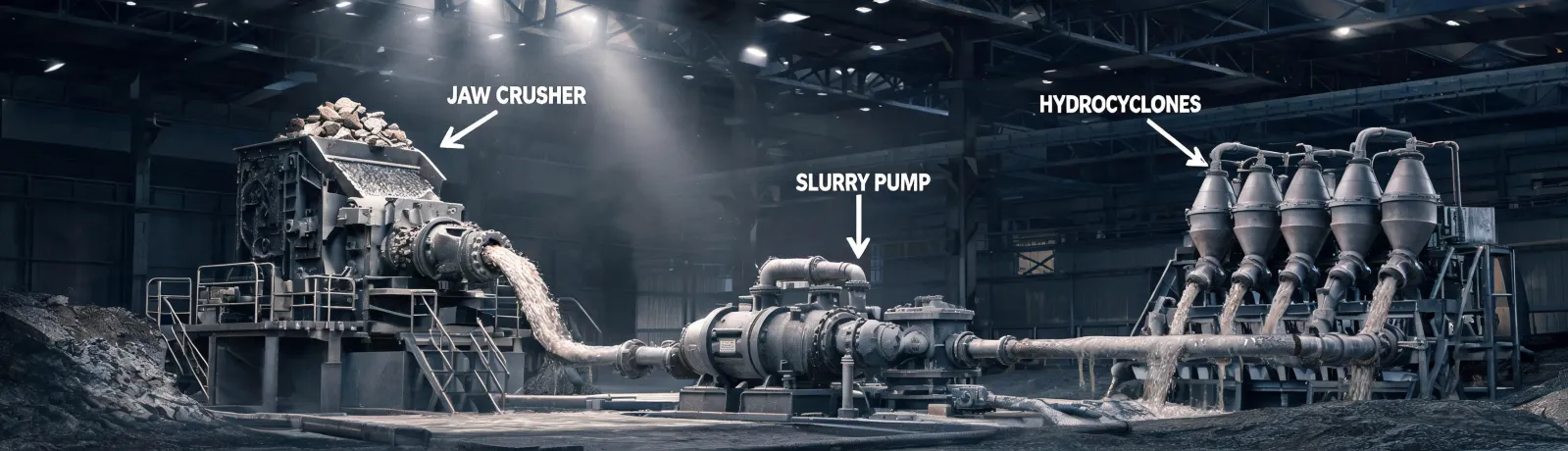
The 2 a.m. Call
It was 2:17 in the morning when my phone lit up. The voice on the other end belonged to a maintenance manager at a mining client's pumping station, and he was not calm.
“The slurry pump is making a noise I've never heard before. Flow is dropping. I think it's dying.” He wasn't asking for a manual. He needed an answer in minutes.
I pulled up the pump records. It was a Weir slurry pump—the workhorse of that site, and I knew from experience that if you treat every pump alarm as a crisis, you'll chase the wrong problem half the time. My first thought, based on the sound he described—a low, grinding growl followed by intermittent rattling—was cavitation or a worn impeller. But it could also be something simpler, like a blocked suction line. Rule one in emergency diagnosis: don't guess from one symptom.
So we went through the checklist. How to know if a water pump is bad? You look at discharge pressure, motor current, sound, and visible leaks. His pressure was fluctuating wildly. The current draw was higher than normal. There was no external leak. That combination pointed to something internal. The pump had to come apart.
The Real Cost of a Cheap Fix
At 3:40 a.m., he sent a video. In the light of a headlamp, we saw the damage. The suction bucket bag—a thick mesh collection bag that catches coarse debris before it reaches the impeller—had torn. Rocks and grit had made it through and chewed up the impeller. And the paddle attachment (the mixing blade that keeps solids suspended in the slurry tank) was badly worn, which meant uneven slurry was heading into the pump. That was the root cause: not one part failure, but a chain.
Then came the decision point. The client panicked and suggested ordering the cheapest available parts from an aftermarket supplier—a bucket bag and paddle attachment from a vendor he found online. I've seen this movie before. In 2022, another client saved $300 on a bargain paddle attachment. It failed in 50 hours and took the pump seal with it. The replacement cost $11,000. That's the real math: the $300 savings turned into an $11,000 repair plus emergency shipping.
Look, I'm not saying all aftermarket parts are garbage. I'm saying they're riskier. With a Weir slurry pump, the clearances, metallurgy, and wear rates are engineered as a system. A cheaper part might bolt on, but bolting on isn't the same as performing. I told him: get the genuine Weir parts. He hesitated, because budget was tight. But with downtime costs stacking up, the cheapest fix was the most expensive option.
We placed a rush order through the Weir Parts Center. The overnight freight cost about $600 extra—not exactly pocket change, but compare it to the alternative. The parts arrived by 11 a.m. the next day. The crew reassembled the pump within six hours. Total downtime was 42 hours, not the 10 days the client had been dreading. At that site, every hour of lost production was roughly $8,000 in processing costs. So the premium for the right parts was a rounding error.
The Part We Almost Missed
But the story doesn't end there. While inspecting the pump area, I noticed the movable weir hydraulic cylinder on the adjacent water-control structure was leaking. The violent vibration from the damaged pump had loosened the cylinder's rod seal. The client had been adjusting the weir manually for weeks, compensating for erratic flow—which overloaded the cylinder even more. So we ordered a replacement cylinder too. That's another pattern: a bad pump can cause secondary failures in connected systems. We missed it during the first call and lost two extra days waiting for a part we could've bundled with the original rush order.
In hindsight, I should've walked him through a broader inspection on the first call. But with a manager breathing down the line, I focused narrowly on the pump itself. A lesson learned the hard way. (Not ideal, but workable.)
So, What Actually Tells You a Pump Is Bad?
From this and dozens of other rush jobs, I can tell you: it's not one clue. It's a pattern.
- Pressure fluctuations—especially with slurry, can mean cavitation, blockage, or worn internals.
- Higher motor current—the pump is working harder because something is damaged or jammed.
- Unusual noise—grinding, rattling, or a whine that wasn't there yesterday.
- Decreased flow—even if pressure looks normal, solids might be bypassing the impeller.
In slurry applications, check the suction bag first. A torn bucket bag is the gateway to most impeller damage. Then look at the paddle attachment: if it's worn, the slurry isn't mixed properly, and the pump will constantly run in uneven conditions. And always look at connected equipment—like a movable weir hydraulic cylinder—because vibration and abnormal flow can damage things you weren't worried about.
The Real Lesson
I wish I could tell you that every emergency ends this well. It doesn't. A lot of it depends on whether you're willing to spend a little more on the right parts and a clear diagnosis.
Don't hold me to exact numbers, but in my experience, the lowest quote has cost clients more in about 60% of cases. Maybe not the first time, but by the time you add repeat failures, extra freight, and lost production, the bargain part is rarely a bargain.
The pump failing isn't the real emergency. The real emergency is deciding what to put back in it. Choose parts you can trust, even if they cost more. Because when your phone rings at 2 a.m., you don't want to explain why you saved $40 on a part that just failed.