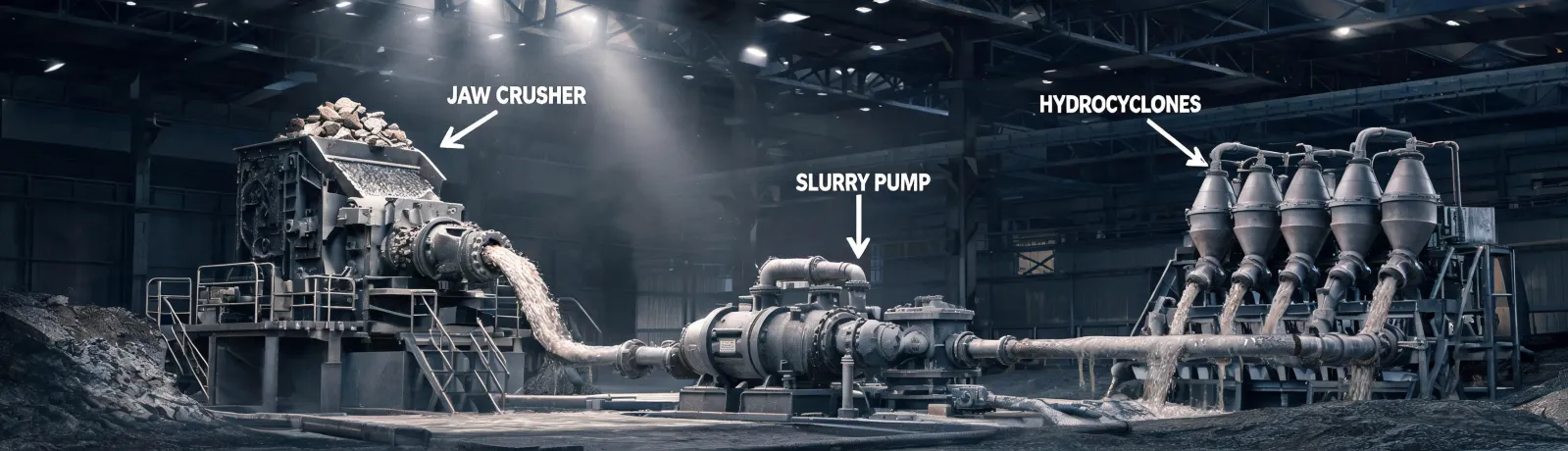
I run emergency equipment sourcing for industrial clients. In my role, I get calls at 4 PM on a Friday for a slurry pump that has to be running by Monday. The question is always the same: should we buy it or rent it?
Over the last seven years, I've coordinated more than 200 rush orders for mining, water management, and construction sites. I don't have hard data on industry-wide buying versus renting patterns, but based on those orders, my sense is most smaller operations default to renting because of cash flow, while larger companies buy for continuity. Both are right, but only in the right context.
This is a side-by-side comparison of buying and renting Weir slurry pumps and other industrial equipment under deadline pressure. I'll look at three dimensions: upfront cost, availability, and long-term maintenance. No single option wins all three.
Dimension 1: Upfront Cost and Cash Flow
Buying a Weir Minerals slurry pump is a serious capital decision. A new unit can run anywhere from a few thousand to tens of thousands of dollars depending on size, metallurgy, and drive configuration. That doesn't include installation, spare wear parts, or training for operators. For a small mining subcontractor, that kind of spend can kill a project's margins.
Renting changes the math. Instead of one big hit, you pay a daily or monthly rate. For a three-month dewatering job, a rental might cost 30-50% of a new pump's price, and the rental company handles breakdowns. That's tempting.
Actually, I used to think renting was wasteful. I still kick myself for buying a used engine hoist once because I thought it would pay off in the long run. It sat in the yard for two years before we sold it at a loss. The lesson: if you don't have a predictable need, rent. Buying the right equipment is cheaper than buying something just because it's what you can afford today. Small doesn't mean unimportant—it means potential. The vendors who treat a $500 order seriously are the ones I've later given $20,000 orders to.
Dimension 2: Availability and Speed
Here's where the conventional wisdom gets shaken up. Most people assume renting is always faster because rental companies have stock. That's true for generic machines like engine hoists, Honda generators, and forklifts. If you're wondering what is a forklift, it's a powered industrial truck used to lift and move materials over short distances—it's also a perfect rental item if you only need it for a few days. Same with a Honda generator, which you can rent for backup power in an emergency.
Specialized slurry pumps are different. In March 2024, a client called needing Weir Minerals slurry pumps for a tailings pond in 36 hours. We found a rental provider with floor stock, but the pump's motor voltage didn't match the site's existing starters. We lost eight hours reworking the connection, and still had to pay the rental company for standby time. Meanwhile, Weir's Parts Center could have shipped the correct motor from a regional warehouse in roughly the same time—if we had verified the delivery cutoff.
The counterintuitive conclusion? For standard equipment, rent. For a Weir mining pump with specific metallurgy and drive requirements, buying or sourcing the exact unit directly can be faster than trying to make a rental fit. The absolute availability of rentals is an illusion when the available unit doesn't match your site.
Dimension 3: Maintenance, Risk, and Long-Term Reliability
Owning industrial equipment means owning its maintenance. Slurry pumps are tough, but they wear. Impellers, liners, and seals all have a finite life when you're pumping abrasive solids. If your team isn't comfortable with a full maintenance schedule, buying can become a liability.
Renting pushes that liability to the rental company. Most contracts include servicing and replacement if the unit fails. After choosing a rented Honda generator for a remote site once, I kept second-guessing. What if it didn't start when the main power flickered? Didn't relax until we ran a full load test. That moment of uncertainty is part of the rental experience—you don't know how well the previous user treated the machine.
Weir does have a global parts and service network—according to Weir's own documentation, the Parts Center supports customers in over 100 countries. We routinely use it for impellers and liners. That's a big advantage over a no-name pump that takes weeks to source. Still, ownership requires inventory planning. For a one-off emergency, rental maintenance might be the easier call; for a continuous slurry circuit, ownership with a proper spares plan often works out better.
Dimension 4: Flexibility for Changing Site Conditions
This is the dimension people forget. Emergency projects change. A two-week dewatering job can turn into two months. Site conditions can shift, requiring a different flow rate or head. If you own a Weir pump, you can often adjust the impeller or add a VFD. If you're renting, you may be stuck with the first unit you ordered, or you have to re-negotiate with the rental company.
I can only speak to mining and heavy industry contexts. If your operation is in exploration or a pilot phase, renting gives you the flexibility to switch equipment as you learn what the site actually needs. Buying makes more sense when the site conditions are stable and you can confidently size the pump for years of duty.
Renting an engine hoist or forklift also gives you freedom—you don't have to store it between phases. For small companies with limited yard space, that's a real benefit.
So What Should You Do?
Here's my practical rule of thumb:
- Buy Weir Minerals slurry pumps and Weir mining equipment when you have an ongoing process, a known maintenance team, and a stable site. The total cost of ownership drops when the equipment runs for years.
- Rent engine hoists, Honda generators, and forklifts unless you use them every week. They're supply-chain commodities, and the rental market has plenty of available units.
- Rent a specialized slurry pump only after you've verified the unit's specs, condition, and compatibility with your existing motors and piping. Bring a checklist, and don't assume in stock means right for you.
One more thing: don't let a supplier make you feel small for asking about rental or short-term options. A good supplier understands that small orders can grow. I still kick myself for not building vendor relationships earlier in my career—the goodwill I rely on now took years to develop.
If you're facing an emergency today, start with the total time you have. That number should drive everything else. If you have 36 hours and a specific Weir pump is the only one that fits, buy it and pay for expedited freight. If you have a week and a standard Honda generator will do, rent it.
Neither option is universally better. The right answer depends on your site, your timeline, and your willingness to carry risk. Knowing the trade-offs is what makes an emergency manageable.