Years ago, someone asked me whether to buy a heat pump water heater vs tankless. My answer was “it depends.” The same is true for weir parts. If someone gives you one universal answer about which weir part to order, they haven't spent enough time around slurry lines, concrete structures, and spare parts bins.
I'm not an engineer. I'm the person who orders and checks weir parts for mining and water infrastructure jobs. In the last seven years, I've made eleven significant mistakes—roughly $18,000 in wasted budget. The worst ones: a batch of 120 weir liners with the wrong bolt pattern, a concrete weir gate that didn't fit because we missed the lifting lug orientation, and a weir mining hose order with the wrong couplings. All three were preventable. This guide is the checklist I wish I'd had.
Three Scenarios, Not One Answer
Look, I'm not going to pretend there's a “best weir part” for everyone. There isn't. The right choice depends on three things:
- What is the part carrying?
- How hard is it being handled?
- What happens when it fails?
That's why I split my decisions into three scenarios. Each one has a different rule.
Scenario 1: Mining Slurry Lines
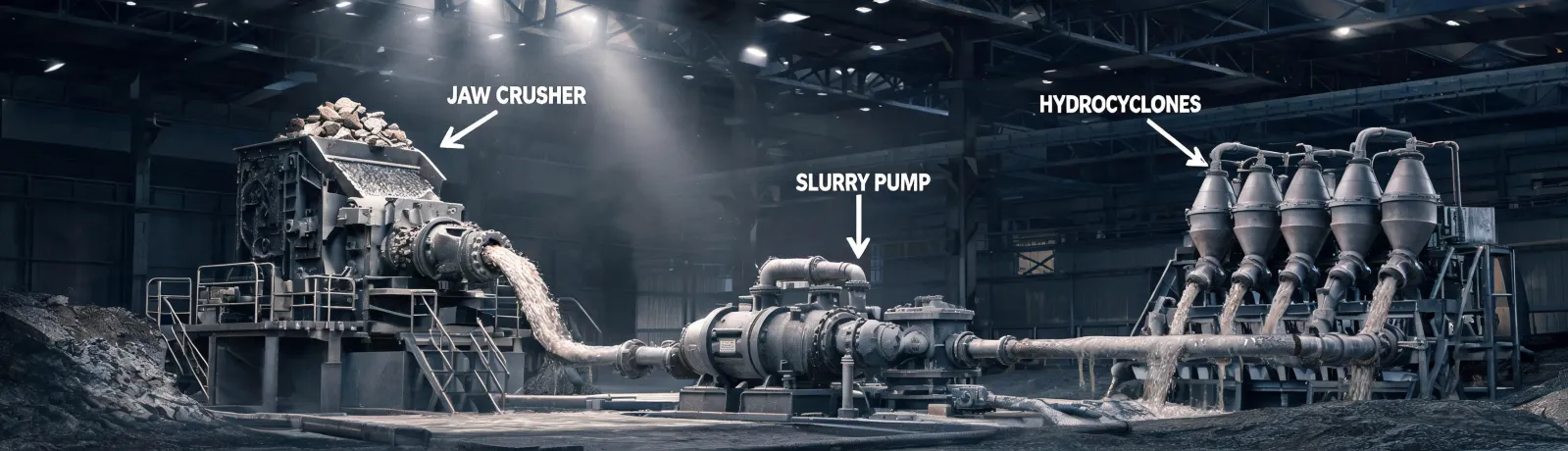
If your application is abrasive slurry, the conversation starts with a weir mining hose and pump wear parts. The common mistake? Buying the heaviest hose you can find. I've done that. A thick-lined hose sounds like the safe choice, but it can be too stiff to route around tight bends. In 2019, I ordered 150 feet of heavy slurry hose. It was a wall of rubber—hard to lift, hard to align, and unnecessary for the duty.
What I check now:
- Bend radius vs. the actual installation path.
- Coupling type, and whether it matches the existing flanges.
- Solids size and concentration, not just pump discharge pressure.
- Temperature range.
- Static vs. flexing service. A hose that flexes needs a different reinforcement than one that just sits there.
- Lead time. Weir mining hose quotes change fast. This pricing was accurate as of Q4 2024; verify current rates before budgeting.
My honest recommendation: for a short, straight, low-pressure line that you can rotate to spread wear, a lighter-duty hose is workable. Not ideal, but workable. For a permanent line carrying heavy solids around a bend all day, buy the premium hose and schedule inspections. There is no zero-maintenance hose. The goal is to know which one you're buying.
And if you're using a hose purely for bypass duty? Don't let a supplier talk you into a threaded metal coupling if the existing flange is drilled for a slip-on type. In my first year (2017), I made that classic mistake. It cost me $480 plus a three-day delay.
Scenario 2: Concrete Weirs and Structural Water Management
This is where I learned about gantry cranes the hard way. In September 2022, we ordered a replacement concrete weir gate. The part was correct. The installation plan wasn't. We rented a gantry crane that had the capacity on paper, but not enough headroom to lift the gate over the anchor bolts. $890 in extra rental, one week of delay, and a crew staring at a perfect part they couldn't install.
Before you order structural weir parts, ask these questions:
- Can a gantry crane actually reach the lift point? Capacity is not the same as headroom.
- Does the gate have lifting lugs, or do you need a spreader bar?
- Is the bolt pattern verified on the actual structure, not just the old drawing?
- How will the truck access the site? A squatted truck—lowered suspension, show-truck style—is not a tool for a gravel ramp. We had one show up in 2023 with a weir gate on board. It bottomed out, shifted the load, and cost us two hours. Know the access path before delivery day.
I'm not a structural engineer, so I can't speak to concrete curing loads or rebar design. What I can tell you from a procurement perspective: the dimensions and lifting plan are where most order mistakes happen. The part rarely fails. The plan does.
If your concrete weir system includes hydraulic cylinders, check the seal kit before you order the gate. The cylinder might be fine, but the mounting bracket might not be standard. And if the gate is painted for safety identification, don't guess the color. According to Pantone's Color Matching System guidelines, the industry standard tolerance for brand-critical colors is Delta E below 2. Above 4 is visible to most people. A mismatched safety color may sound cosmetic, but on a high-visibility component it creates the kind of confusion that gets someone injured.
One more note: if your project is a small temporary diversion weir, you don't need the full engineering review. A template from an existing section is enough. The honest answer is that not every weir gate needs a six-page rigging plan.
Scenario 3: Small Replacement Parts
Not every weir part is a slurry pump or a concrete gate. Sometimes it's a pool skimmer weir replacement, a seal, or a piece of hardware. These are small and cheap—but they still need a checklist. In Q1 2024, I ordered 400 pool skimmer weir parts for a maintenance contract. The first one fit. The second one didn't. We caught the dimensional issue before shipping, but only because I had added a “test the first item” rule to the checklist. That caught 47 bad pieces before they reached a customer.
I have mixed feelings about aftermarket parts. On one hand, they're cheaper and sometimes made in the same factory as the branded version. On the other hand, a failed seal in a slurry pump costs way more than the twelve dollars you saved. For non-critical parts—a skimmer gate, a gasket you can replace in five minutes—aftermarket is fine. For anything that affects pressure, alignment, or safety, stick with brand-approved parts.
Here's the contrarian part: don't always trust “OEM only.” Sometimes the OEM part number has changed, and the aftermarket version is dimensionally identical but made from a different material. Check the material spec, not just the part number. When I say “check,” I do not mean glance at the label.
How to Know Which Scenario You're In
Here's the thing: most people don't know their own duty cycle. They know what pump they have, but not the actual pressure at the hose inlet, or the solids size distribution. Before you order any weir part, ask:
- Is the part carrying abrasive slurry or mostly water?
- Will it be handled once by a crew, or run continuously?
- If it fails, do you lose 20 minutes or two days?
- Can the proposed lifting equipment reach the installation point?
If it's abrasive, continuous, and failure kills production, use Scenario 1. If it's structural and safety-critical, use Scenario 2. If it's small, easy to replace, and failure is an inconvenience, use Scenario 3. That's not “use your judgment.” It's a decision rule.
The heat pump water heater vs tankless question works the same way. Both can be right, depending on utility rates, climate, and how much hot water you actually use. The difference is that a wrong water heater choice is annoying. A wrong weir part can shut down a site. So check the duty, check the lifting plan, and check the first item before you commit the batch.
The right part is not the strongest part. It's the part that matches the duty and the installation plan.
I learned that through $18,000 of my own mistakes. You don't have to.