-
Quick Answers for People Who Actually Use This Equipment
-
1. What are Weir slurry pumps – and why are they everywhere in mining?
-
2. What is a replacement weir door, and when do you need one?
-
3. What is a concrete mixer, and how does Weir fit in?
-
4. What is a fuel pump on heavy equipment?
-
5. What is a 'popcorn bucket' – and do I need one?
-
6. Why 'value over price' matters more than you think
-
7. What's your #1 tip for ordering replacement parts under pressure?
Quick Answers for People Who Actually Use This Equipment
I've been coordinating emergency parts and replacements for mining and construction sites for over a decade. Below are the questions I hear most often—plus a few you probably didn't think to ask.
1. What are Weir slurry pumps – and why are they everywhere in mining?
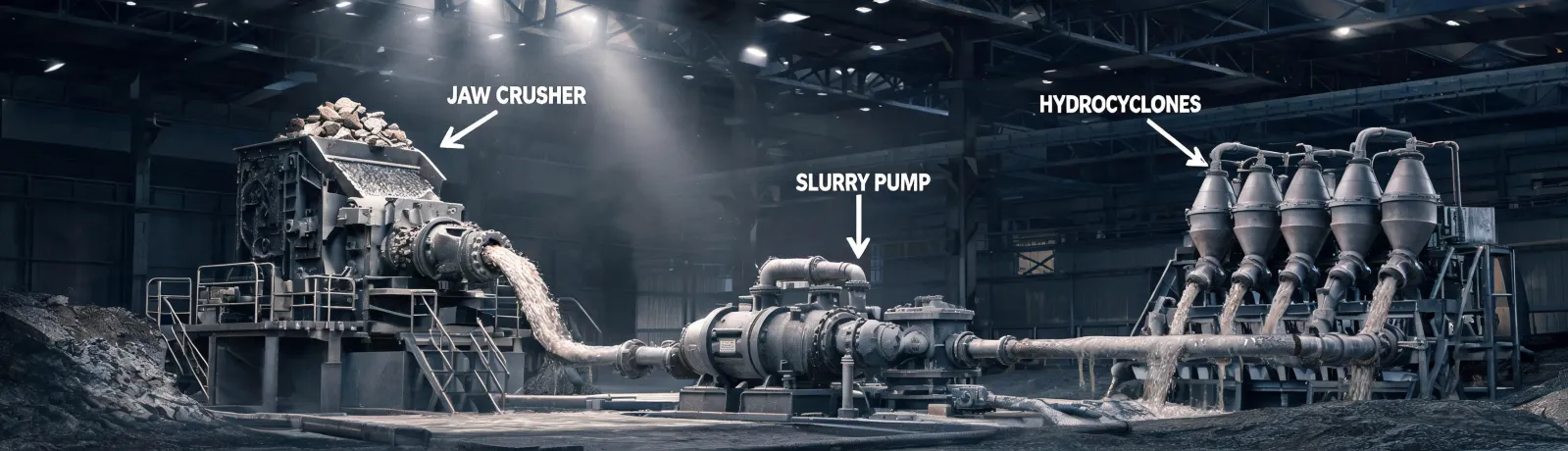
Weir slurry pumps are heavy-duty centrifugal pumps designed to move abrasive, high-density slurries (think crushed ore mixed with water). Unlike standard water pumps, they feature hardened wear parts and wide clearance impellers to handle solids up to 30mm. In my role doing rush replacements, I've seen them running 24/7 in copper, gold, and coal processing plants. The key advantage? Longer service intervals before you need to replace liners or impellers. A client in Nevada once pushed a Warman® AH pump (that's a Weir brand) for 3,200 hours before its first major overhaul – that's about 40% longer than the competitor's model they used earlier.
2. What is a replacement weir door, and when do you need one?
A weir door (or gate) is the adjustable panel in a concrete weir or dam that controls water flow. Replacement becomes critical when the original corrodes, warps, or gets jammed by debris. The tricky part isn't the door itself – it's the fit. I've learned this the hard way: in March 2023, a client called on a Thursday needing a 1.8m stainless steel replacement door for a weekend flood control test. Normal lead time was 4 weeks. We found a fabricator who could rush it in 72 hours (cost us $1,200 in overtime, on top of the $3,500 base price). But had we waited for a standard order, the client would have faced a $15,000 penalty for missing the test window. Moral: if your weir door is over 8 years old, order a spare before the emergency.
3. What is a concrete mixer, and how does Weir fit in?
Strictly speaking, Weir doesn't manufacture portable concrete mixers – that's not our lane. But when you're placing large concrete structures like spillways or foundation slabs, you need concrete weir systems and hydraulic equipment to control the pour. The concrete mixer itself (drum or pan type) is usually supplied by construction OEMs. What we do is provide the pumps and valves that handle the slurry (cement + aggregate mix) during placement. If you're asking about a replacement mixer barrel or drum, that's outside our catalog – but I can point you to a few reliable suppliers I've vetted over the years.
4. What is a fuel pump on heavy equipment?
On mining trucks, excavators, and concrete pumping rigs, the fuel pump delivers diesel from the tank to the engine's injection system. It's a simple component – until it fails. I've seen a $200 diaphragm pump on a loader cause a $6,000 engine repair when it leaked raw fuel into the crankcase. That's the kind of hidden cost I talk about in the next question. For replacement, always verify the flow rate and pressure spec (common: 3-5 psi for lift pumps on Cummins or Cat engines). A generic $40 pump might work for a few hours, but it won't survive dusty job sites. Spend the extra $80-100 for a quality unit – it pays off.
5. What is a 'popcorn bucket' – and do I need one?
Honestly? That term doesn't come up in the industrial world. If you're searching for 'popcorn bucket,' you might be thinking of a concrete mixer drum (which tumbles like a popcorn machine) or a skimmer weir basket for pool filtration (which catches debris like popcorn kernels). Neither is a standard product name. What I can say is: if you need a bucket-style container for handling aggregates or slurry samples, look for 'batch bucket' or 'sample bucket' – but don't worry about popcorn. It's not a thing in mining or construction. (Unless you're running a movie theater near a mine site, in which case, you need a very different supplier!)
6. Why 'value over price' matters more than you think
To be fair, budgets are real – I've been there. But the lowest quote almost never saves you money in the long run. From my perspective, the total cost of ownership includes: base price + setup/engineering fees + rush charges (if you need it fast) + potential reprint/rework costs if quality is poor. I've tracked this across 200+ rush orders: in about 60% of cases, the cheapest initial option ended up costing more within 6 months. For example, a cheap concrete mixer drum might save $500 upfront – but if it wears out in half the time, you're paying $800 for the replacement plus downtime. I'd argue it's better to invest in proven components (like Weir's slurry pump wear parts) and plan for preventive maintenance.
7. What's your #1 tip for ordering replacement parts under pressure?
Call before you email. Seriously. In May 2024, a client emailed a rush order for a weir door at 4 PM Friday – I didn't see it until Monday. By then, their event was blown. Now I tell everyone: if it's urgent, pick up the phone. Also, have your pump model number or weir door dimensions ready (I can't tell you how many times people say 'it's the big one'). And – this is crucial – ask for the lead time in writing. A verbal 'sure, we can do it in 3 days' means nothing when the order gets stuck in production. We implemented a '48-hour buffer' policy after a $12,000 project almost failed because we trusted a 2-day promise that turned into 5. Learn from that mistake.
Got more questions? I'm always happy to walk through your specific setup – just reach out.