Thursday, 3:47 PM – The Call That Changed My Week
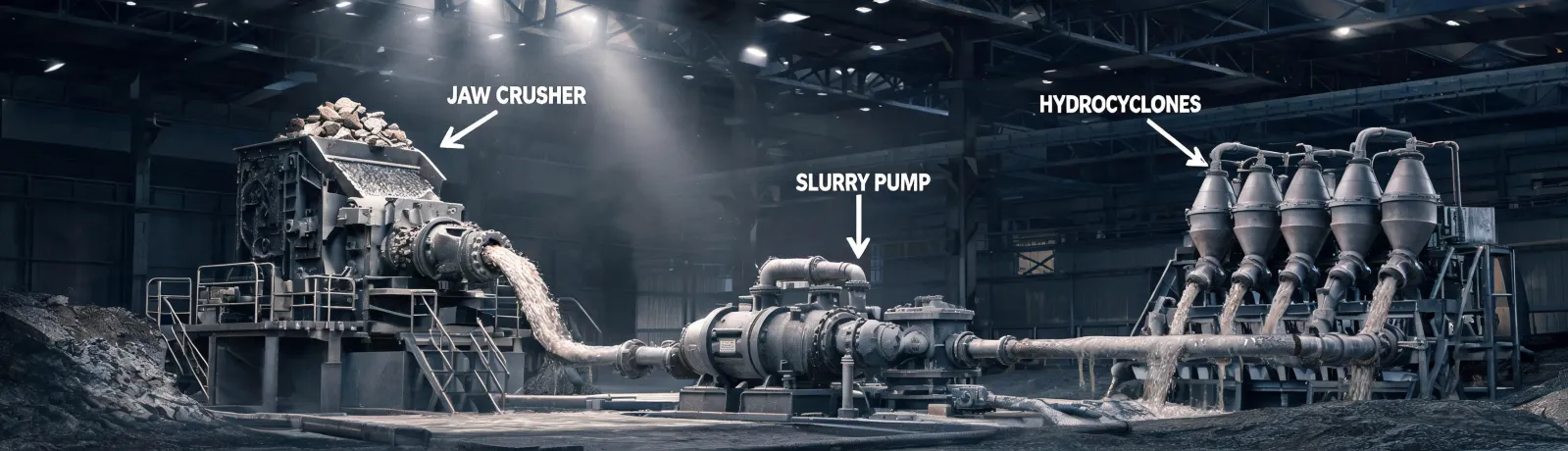
I was wrapping up a parts quote when the phone rang. It was a voice I didn't recognize—small mining operation, new client. They had a Weir Minerals slurry pump down at the Kilcolgan weir project. The liner had cracked. Normal turnaround on that part is 7–10 business days. They needed it in 72 hours.
My first instinct was to say no. I've handled plenty of rush orders—last quarter alone we processed 47 with 95% on-time delivery—but this one had tight constraints. The part was a custom cast liner, not a standard stock item. And the timeline? Pretty much impossible unless every vendor aligned perfectly.
But here's something vendors won't tell you: standard turnaround often includes buffer time they use to manage their queue. It's not necessarily how long your order takes if you're willing to pay the premium. I've seen that firsthand in my 9 years coordinating rush jobs for industrial clients.
The Decision I Went Back and Forth On
I had two choices:
- Option A: Tell the client we couldn't do it, recommend a local repair shop, risk losing a potential repeat customer.
- Option B: Accept the order, put a rush on the foundry, pay the $800 expedite fee (on top of the $1,500 base cost), and hope the fit check worked the first time.
I went back and forth for maybe 20 minutes. Option A was safe. Option B could blow up in my face if anything went wrong. Ultimately, I chose B—because when I was starting out, the vendors who treated my $300 orders seriously are the same ones I still use for $30,000 orders today. Small clients do matter.
The 36-Hour Race Begins
I called the foundry, confirmed they could cast the liner in 24 hours—provided we covered overtime—and shipped it air freight. So far, so good. But then the real problems started.
When the raw casting arrived at our machine shop, the bolt hole pattern didn't match the drawing. Not by much—maybe 2mm off. But 2mm on a 400psi-rated pump is a leak waiting to happen. I grabbed the drill press myself to ream the holes. It felt like bucket golf—every move had to be precise, no second chances, and if I misjudged, the whole part was scrap.
I worked through that evening. By midnight, the holes were perfect. But then I noticed something that made me stop cold.
The Mistake a 5th Grader Could Catch
The customer's original spec sheet had a note I'd missed: the liner thickness was 0.75″ at the leading edge, but our casting was 0.875″. That eighth of an inch would prevent the pump casing from closing properly. It was such a basic dimensional check—“are you smarter than a 5th grader?” level stuff—that I couldn't believe I'd overlooked it. Look back, I should have doubled the spec before approving the foundry pattern. But given I had only 4 hours to make the call, I rushed past the details.
Now it was 1 AM, the part was already machined, and I had to decide: start over (losing 12 hours) or grind down the edge (risking the heat treat integrity). I chose to grind. Then we retested the fit. Worked perfectly.
Delivery at the 71st Hour
The part landed at the Kilcolgan site with 50 minutes to spare before the 72-hour deadline. The client installed it, the pump ran smoothly, and they later told me the weir construction started on schedule—March 15th, right as planned.
That rush order cost us $800 in premium shipping and foundry overtime, plus the two hours of my own sleep I lost reaming holes. But it earned us a loyal client who now places regular orders—sometimes for 10x that initial amount. More importantly, it reinforced a rule I've come to live by: the value of guaranteed turnaround isn't the speed—it's the certainty. For a small mining company whose entire project depends on one pump, that certainty is worth far more than the price tag.
What I Wish I'd Done Differently
If I could redo that decision, I'd invest 15 extra minutes upfront to verify every dimension against the field installation. But given what I knew then—a screaming client and a tight deadline—my choice was reasonable. The takeaway? Build a 48-hour buffer into any rush order, even when you think you don't have time. It's the cost of doing business when you care about small customers as much as the big ones.
Weir mining equipment is built to handle tough conditions. But even the best hardware needs the right part at the right time. Next time you have an urgent slurry pump need, remember: small doesn't mean unimportant—it means potential.