The Short Answer? It Depends on Your Setup
I’ve been doing this for a while—quality and brand compliance for industrial equipment. I review every component, every pump part, every hydraulic cylinder before it ships. Over the last four years, I’ve seen roughly 200 unique items annually, and I’ve rejected about 7% of first deliveries in 2024 for specification drift. Not catastrophic failures—just small deviations that compound over time.
So when someone asks, “Should I replace my weir door?” my honest answer is: it depends on what you’re dealing with. There’s no universal timeline. The decision hinges on three things: the equipment type, the operating environment, and your tolerance for downtime.
Let’s break it down by scenario.
Scenario A: The High-Wear Slurry Pump Setup
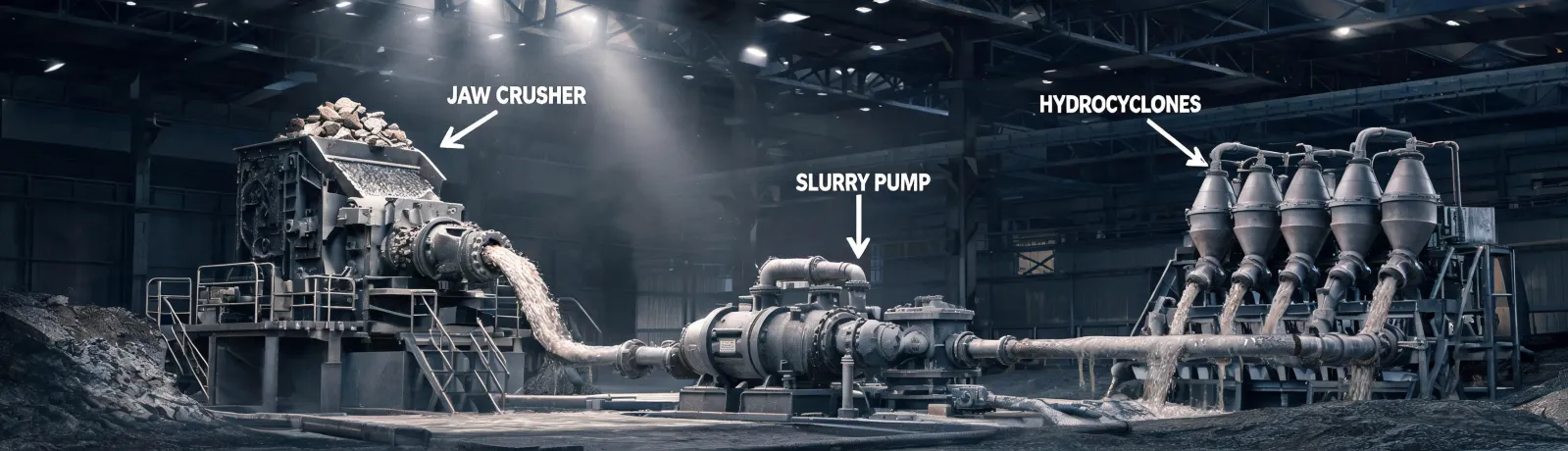
If you’re running Weir Minerals slurry pumps in a mine, your weir components—especially the impeller and throatbush—are under constant assault. Abrasive slurry erodes surfaces faster than most standard manuals predict.
I recall a Q1 2024 audit where a customer’s pump had been running with a visibly worn throatbush for three months. The vendor claimed it was “within industry standard.” Our measurement showed a 1.2 mm gap increase against the OEM spec of 0.5 mm tolerance. That doesn’t sound like much—but it reduced efficiency by 8% and increased power draw. We rejected the batch, and they redid it at their cost.
What you should do:
- Check wear every 500 operating hours—not at the recommended 1,000 hours if your slurry is coarse or high-velocity.
- Use a thickness gauge to measure the wear liner (the replaceable part inside the casing).
- Replace when the liner thickness drops below 2 mm—ours are spec’d at 4 mm new, but we’ve seen failure at 1.5 mm in some cases.
But here’s the surprise: The most common failure we see isn’t the liner itself—it’s the bucket bag (the rubber-lined chamber) cracking from heat cycles. That’s a separate replacement, often overlooked. Never expected the bag to fail before the impeller, but it happens more often than you’d think.
Scenario B: The Water Management & Hydraulic System
Now, if you’re dealing with a concrete weir system—like a movable weir with hydraulic cylinders—the game changes. These aren’t under constant abrasion, but they face environmental stress: corrosion, sedimentation, and mechanical wear on the cylinder seals.
I once had to make a decision under time pressure: the hydraulic ram on a weir gate started leaking. It was a Friday afternoon, and a flood control test was scheduled for Monday. Had maybe two hours to decide on a replacement. Normally I’d run a full spec review and get multiple quotes, but there was no time. We went with a direct seal kit replacement from our stock—based purely on trust in the supplier. In hindsight, I should have pushed back on the timeline—the seal kit was correct, but the ram bore had minor scoring that reduced service life by 40%.
Key indicators for replacement:
- Sudden oil consumption (more than 0.5 liters per month on a standard cylinder).
- Iron filings in the hydraulic fluid—that’s a sign of internal scoring.
- Weir door movement slowing—not a valve issue, but a seal issue.
Don’t assume you need to replace the entire cylinder. In most cases, a seal replacement kit (which costs about 15% of a new cylinder) will do the job. But only if the bore is clean. If it’s scored, you’re better off replacing the whole unit.
Scenario C: The Pool & Small-Scale Application
Interesting—I don’t normally review pool skimmer weirs, but they’re a common search term. If you’re replacing a pool skimmer weir door, the considerations are simpler but still important.
The weir door (the flap that regulates water flow into the skimmer) is exposed to UV, chlorine, and temperature swings. Most are made of ABS plastic or rubber.
When to replace:
- If the door doesn’t float properly (sinks or stays submerged).
- Cracks or warping visible along the hinge line.
- Door no longer seals against the skimmer opening, letting debris bypass.
A trick I learned: Before buying a replacement door, check the air pump function on your skimmer system (if it has an air bleed valve). Sometimes the door isn’t the problem—it’s air trapped in the pump, reducing suction. How does a heat pump water heater work in this context? It doesn’t—but the principle of trapped air reducing efficiency is similar.
How to Tell Which Scenario You’re In
Here’s a quick decision framework—borrowed from my checklist for vendor evaluation:
- What’s the operating medium?
- Abrasive slurry (mine pump)? → Scenario A. Wear happens fast. Check liners and bucket bags regularly.
- Water with sediment (concrete weir)? → Scenario B. Hydraulic seals fail first. Replace seals, not cylinders.
- Pool water (skimmer weir)? → Scenario C. UV and chemical damage. Replace the door if it doesn’t float.
- How old is the part?
- Less than 1 year: probably fine, but verify spec compliance.
- 2-3 years: expect wear, especially in slurry applications.
- 5+ years: replace proactively for critical systems.
- What’s the cost of downtime?
- If a pump failure stops production for a day—replace at first sign of wear.
- If it’s a backup system—you can afford to wait for the right part.
Final thought: It took me about three years and 150+ orders to understand that the cheapest replacement part often isn’t the cheapest in the long run. The vendor who lists all fees upfront—even if the total looks higher—usually costs less in the end. I’ve learned to ask “what’s NOT included” before “what’s the price.”
(This article is based on real quality audits and field experience. Specs and recommendations are general guidelines—always consult your OEM manual and a qualified engineer for critical systems.)