The Tuesday That Started It
The phone call came on a Tuesday in March 2024. Our maintenance supervisor, Dale, said the slurry pump at the client's dewatering site was down, and he needed an impeller for a Weir pump by Friday. Not in two weeks. Not as soon as possible. Friday.
For the past seven years, I've been the office administrator for a 60-person industrial services company. I manage purchasing for roughly $400,000 a year across thirteen vendors. I report to both operations and finance. In practice, that means my day is a pile of orders that range from high-tech pump parts to printer toner. The first question I always ask: 'How much will this cost me if it fails?'
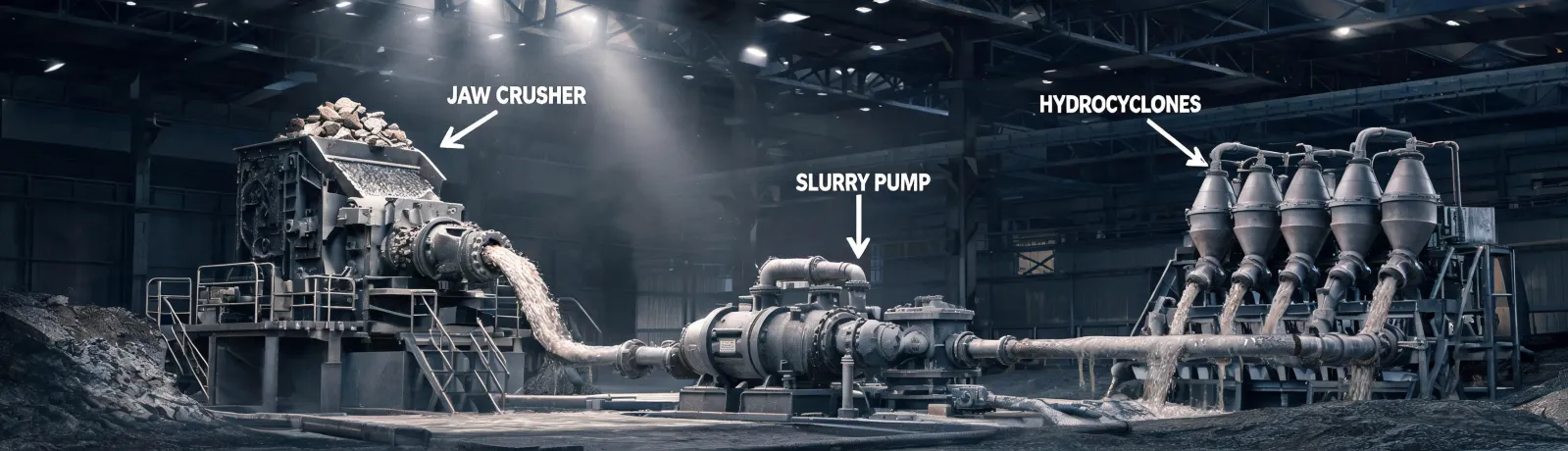
Our company has used Weir mining technology for years across dewatering and slurry handling. The pump in question was a Weir horizontal slurry pump, and the impeller had worn past its limit. Dale had already checked the part number. All I had to do was find a price, get approval, and order it. But the supplier we usually used didn't have an OEM part in stock locally. A different vendor offered an aftermarket impeller for about $300 less and said it was 'exactly compatible.'
The Temptation of the Cheap Part
Let me be honest: $300 is real money when you're managing a budget. It's not life-changing, but it adds up. I could use that money for other parts, and the maintenance crew could install the cheaper impeller on the same schedule. From the outside, replacing a pump impeller looks like a simple swap. Remove the casing, take out the worn part, put in the new one. The reality is that a pump is a hydraulic system, and the impeller is what gives it its performance curve. If the impeller geometry is off, the pump can still turn, but it may use more power, vibrate, or fail to move slurry at the required rate.
I remembered the FTC advertising guidelines on ftc.gov: claims have to be truthful, not misleading, and substantiated with evidence. So I asked the aftermarket vendor for their performance data. They sent a photo of the part and wrote, 'Trust us, it's the same.'
That was a red flag. Here's the thing: a pump part can fit perfectly and still be the wrong part. Why does this matter? Because the client wasn't paying for the impeller. The client was paying for uptime. If the pump failed again the following week, the cost of that $300 savings would look tiny next to the money lost during the second shutdown. Look, I'm not saying budget options are always bad. I'm saying that for a high-wear rotating component in a slurry application, the risk isn't worth the discount.
One Week, Three Different Kinds of Buying
That same week, my inbox had two other pump-related requests. A hotel client's maintenance manager asked for a pool weir replacement. The old weir piece had cracked and was letting debris float past the skimmer. He also needed a pool pump motor because the current one was humming and tripping the breaker. The hotel couldn't close the pool for a week. I could have ordered a lower-priced motor from a general supplier, but I wasn't sure the mounting bracket would align with the pump body. I contacted the pool equipment distributor, gave them the old motor's frame size, and paid a little more for a verified cross-reference. It arrived in two days.
At a water treatment account, the facility manager asked me to order an air pump for their aeration system. The existing unit was still running, but it was noisy and the service log showed declining output. We could wait for the next budget cycle or replace it early. I recommended early replacement. Airflow matters for the bacteria that treat water. If the air pump underperforms, water chemistry starts to drift, and the client sees the problem long after we've left.
And, before lunch, the office manager asked me to search for 'how to clean washing machine top loader' because the machine in the break room had developed a musty smell. That part of the job is less glamorous than slurry pumps, but it's part of the same truth: nobody thanks you for the boring stuff you handle before a problem reaches them.
The Pool Weir and the Pool Pump
The pool weir replacement turned out to be a good example of the same lesson on a smaller scale. The hotel's maintenance guy suggested buying the cheapest replacement part online. It was around $18. The one that matched the original dimensions was $34. I measured the opening, checked the float buoyancy, and went with the $34 part. Why? Because a pool weir's job is to control water flow and let the skimmer catch debris. A poorly balanced weir can float too high, letting leaves get past, or too low, restricting water flow. For $16, it wasn't worth the chance of a guest complaint.
Look, I can't prove the cheap weir would have failed. But the pattern was the same as the slurry pump: the part that looks closest to the original on paper may not behave the same way in the water.
The Call I Was Nervous About
Back to the slurry pump. I called the company that supplies our Weir parts and explained the situation. They had the genuine impeller in stock at their regional distribution center. The price was higher than the aftermarket one, but the engineering department confirmed the part number matched Dale's pump spec. They also sent the expected wear-life data and a warranty form. That was the documentation the aftermarket vendor could not produce. The Weir Parts Center made the approval easier because the paperwork didn't leave anything to guesswork.
I submitted a purchase order request with a note explaining the difference. My VP approved it, but I still had that anxious feeling you get when you spend more money than planned. Until the part arrived on Thursday afternoon and Dale texted me: 'Got it. Installing now.'
So glad I checked the engineering details first. I was this close to ordering the cheaper part just to hit the budget target.
What Happened After Installation
The pump was back online Friday morning. The client reported no issues, and the site ran through the next scheduled shutdown without another pump failure. There is something satisfying about watching a pump run smoothly after a part decision you stressed over for two days. The stress doesn't show up in the maintenance log, but it was real.
The best part of the experience wasn't just the installation. It was the follow-through. The warranty registration and the performance sheet arrived with the delivery. That paperwork made my accounting team happy and gave us a clear record for the client's asset file.
A Few Things I Took Away
First, the real cost of a part isn't the invoice price. It's the cost if the part doesn't do its job. Rework, downtime, extra freight, and a client who wonders whether you know what you're doing. That last one is hard to quantify, but it's the most expensive.
Second, quality and brand perception are the same thing. The client sees the result, not the purchase order. If a machine works, they trust us. If it fails, they question everything. The $300 I saved by choosing a different impeller would have been invisible to the client until something went wrong. Then it would have been a disaster.
Clients aren't buying a part. They're buying the operation it keeps running.
Third, I had to admit the limits of my own experience. My purchasing background is mostly industrial maintenance and facility supplies. If you work with light-duty equipment or residential repairs, your mileage may vary. The pool weir replacement taught me that even simple parts have trade-offs, but I'm not a hydraulic engineer. I called people who are.
Don't hold me to the exact figures, but the slurry pump impeller cost around $1,100 through the Weir parts network, while the aftermarket option was around $800. As of early 2025, that pricing was accurate for our location, but pump prices and lead times change quickly. Verify current rates and availability before you budget.
Since we tightened our parts policy in 2023, equipment-related client complaints have dropped by about 18%. I can't prove causation, but the trend is clear.
When I look back at that week, the thing I remember most isn't any single purchase. It's the shift in how I evaluate a vendor. Now I ask three questions before approving parts like this:
- What is this part expected to do, and is there data to show it can do it?
- What happens to the whole system if this part wears out early?
- What does the warranty cover, and who stands behind it?
The answers don't always lead to the most expensive option. But they usually lead to the option with the fewest surprises. That's what quality means from my side of the desk: no surprises on the job site, no surprises in the invoice, and no surprises in the client's feedback.