No Universal Answer – It Depends on Your Project
I've been handling equipment procurement for our multi-site operations since 2020 – roughly $2.5 M annually across 15 vendor categories. In that time, I've learned one hard truth: there is no single 'best' machine or component that works for every job.
What works for an open-pit copper mine will be completely wrong for a flood-control concrete weir project or a downtown building site. So instead of pretending I have a magic bullet, let me break down three common project scenarios and what I've found works (and doesn't) for each. (Should mention: I'm not a design engineer, so I'll focus on procurement lessons – when cheap costs you more, and when paying extra pays off.)
Scenario 1: Mining Operations – Focus on Slurry Handling
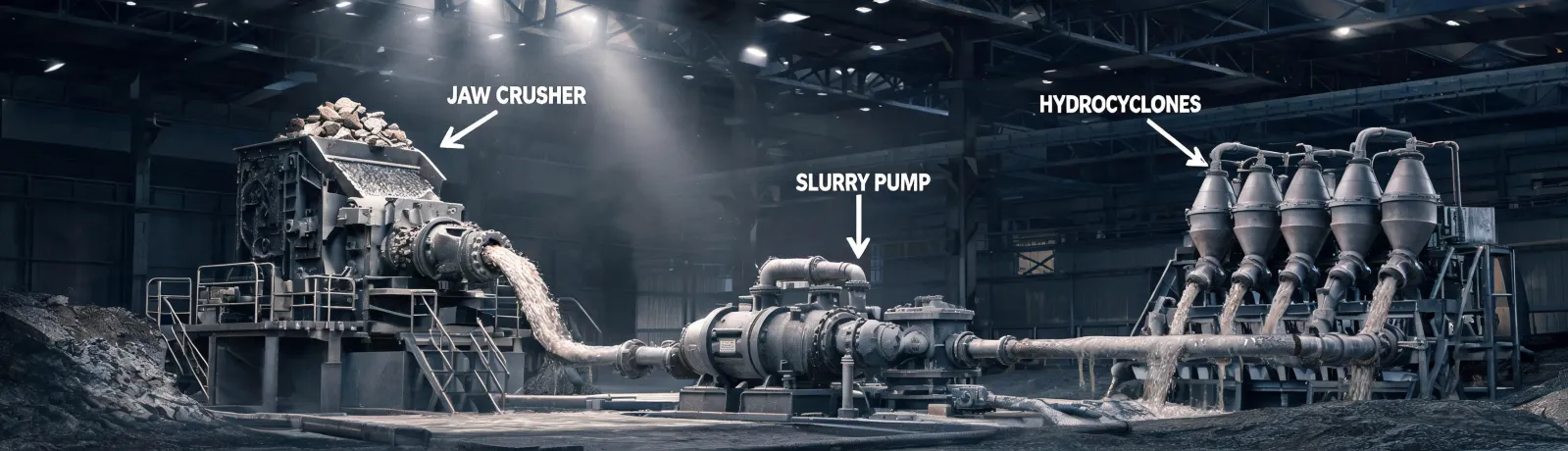
If your project involves moving abrasive, high-density slurries (tailings, concentrates, cyclone feed), the heart of your operation is the slurry pump. We've used Weir Minerals slurry pumps for our copper and iron ore sites, and they've been reliable – but even within that brand, you need to match the pump to the specific slurry characteristics.
What to look for:
- Pump type: Horizontal vs. vertical vs. submersible. Horizontal workhorses for long-distance transfer, vertical for sump dewatering.
- Wear materials: Hyperchrome, rubber-lined or ceramic. For fine, abrasive slurries, rubber liners outlast metal in some cases (counterintuitive, I know).
- Seal system: Mechanical seals vs. gland packing – depends on whether your site can handle constant water flush.
I recommend the Weir Warman® AH series for coarse, high-wear slurries. But – and this is the honest limitation part – if you're pumping corrosive slurries with high acidity (pH <3), those standard linings degrade fast. In that case, you might need a fully lined metal pump with a passivation coating. Not a sales pitch – it's just what works.
Supporting equipment on a mine site:
- Breaker box (switchgear): Don't skimp on the electrical panel that feeds your big pumps. I saved $1,200 by buying a 'budget' breaker box once. The savings evaporated when a poorly rated breaker tripped and shut down the dewatering system for 4 hours. Net loss: $8,700 in downtime. (That was 2023 – I still wince.)
- Gantry crane: For pump maintenance – lifting heavy volute liners and impellers. A 5-ton capacity gantry is usually enough for medium pumps. But if you're in a tight underground drift, a mobile gantry with swivel casters might be better than a fixed A-frame. I'm not a structural engineer, so please verify wheel loads with the site safety team.
Natural language moment: After selecting the pump, I kept second-guessing: what if the rubber lining isn't as durable as chrome? The first 6 months were stressful – didn't relax until wear measurements showed 0.2 mm after 500 hours. Put another way: sometimes the counterintuitive choice is the right one.
Scenario 2: Water Management & Hydraulic Structures – Concrete Weirs
For flood control, irrigation diversions, or hydropower intakes, you need a concrete weir – and often a movable weir hydraulic system to adjust crest height. Weir (the company) actually makes hydraulic cylinders and control systems for these, but the procurement decision goes beyond the hardware.
Three key considerations:
- Fixed vs. movable weir: If your site has variable flow (e.g., monsoon cycles), movable weirs with hydraulic actuation give you operational flexibility. But they come with more moving parts – more maintenance, more spares inventory.
- Concrete mix design: The weir must resist scour and freeze-thaw. I'm not a concrete specialist, so I can't speak to mix designs. What I can tell you from a procurement perspective: get a certified third-party concrete testing lab involved early. Our 2024 project nearly failed because the contractor used a cheaper aggregate that didn't meet ASR (alkali-silica reaction) limits.
- Hydraulic unit reliability: The power pack, cylinders, and hoses should be from a manufacturer with a proven track record in water infrastructure. Weir's integrated weir systems have a good reputation – but if you're in a remote site, verify lead times for replacement seals and cylinders. (As of January 2025, Weir Parts Center carries most hydraulic components for standard weir cylinders.)
Honest truth: Movable concrete weirs are not ideal for debris-heavy streams (large logs, ice). The hydraulic cylinders can be damaged. In such cases, a fixed weir with a fish-friendly bypass might be better. This gets into civil engineering territory – beyond my procurement role. I'd recommend consulting an experienced hydraulic structures consultant before finalizing specifications.
Scenario 3: Construction Sites – Excavator vs. Backhoe, and Supporting Equipment
Every construction superintendent has an opinion on excavators vs. backhoes. Here's my procurement-tested breakdown:
- Excavator – Best for deep digging, mass excavation, and when you need hydraulic breaker attachments. The 360° rotation makes it more efficient in tight corners. Typically higher digging force and reach.
- Backhoe loader – Best if you need versatility: digging, loading trucks, and also moving materials around the site (backhoe can act as a front-end loader). Lower capital cost and easier to transport. But shallower digging depth and less breakout force.
I once chose a 20-ton excavator over a backhoe for a utility trenching project. Saved $3,000 on the rental (excel? wait – actually the excavator was cheaper per week, but we needed a separate front-end loader for backfill. Net cost was about the same). The decision felt right until the operator complained about maneuverability in a residential driveway. (Should mention: we had a 3-day buffer, but it still caused a delay.)
Supporting equipment:
- Gantry crane: For lifting steel beams or precast concrete panels. A portable 2-ton gantry is handy for small jobs; for anything over 5 tons, you'll probably need a mobile crane with a larger footprint. Not that you'll use a gantry for every lift – sometimes a truck-mounted crane makes more sense.
- Breaker box: On a construction site, you need a weatherproof, lockable breaker box with GFCI protection. Federal OSHA requires it (29 CFR 1926.404). I've seen a 'cheap' outdoor breaker box corrode in one season – water ingress caused a week of downtime. Saved $200, paid $1,800 in rework and temporary power rental. Surprise, surprise.
Decision after the fact: Hit 'confirm' on the excavator purchase order and immediately thought 'should I have gone with the backhoe?' Didn't relax until the first trench was dug in under 2 hours. But if I had to do it again for a site with lots of backfill work, I'd rent a backhoe. It truly depends on your crew's typical workload.
How to Determine Which Scenario You're In
Ask yourself these three questions:
- What is the primary material you're moving? Abrasive liquid slurry → Mining scenario (Scenario 1). Water with variable flow → Water management (Scenario 2). Soil, rock, and concrete → Construction (Scenario 3).
- How critical is endless uptime? For continuous process plants (mining, water treatment), invest in higher-grade components like premium breakers and gantries. For construction projects with movable deadlines, you can sometimes afford a cheaper backup plan.
- What is your maintenance capability? If you have a full-time mechanic, a complex movable weir or fancy slurry pump is fine. If you rely on external service, choose simpler, more forgiving equipment.
There's no prize for picking the 'right' machine – only for picking a machine that fits your project, your team, and your budget. And if you're still unsure, don't hesitate to call a technical sales engineer. Most reputable manufacturers (including Weir) have application engineers who can help you narrow down options without being pushy. I've found that honesty – saying 'this model probably won't solve your problem' – builds longer trust than selling something that barely works.