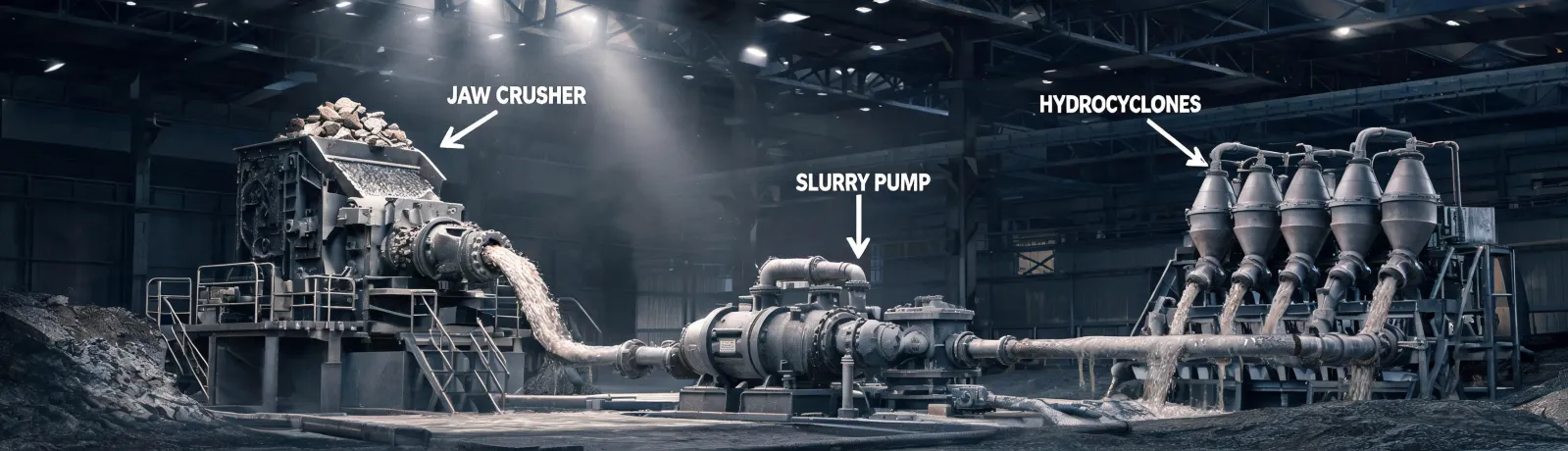
Here's the conclusion you came for: most emergency pump parts orders are not actually emergencies. From rush requests for Weir mining slurry pumps to a failed well pump on a farm, the pattern is the same. Someone finds the problem late, orders the fastest shipping available, and then pays multiple times for speed. In my role coordinating parts for mining and water clients, I've handled 200+ rush orders in eight years. As of Q4 2024, roughly one-third of those could have been avoided with a 20-minute compatibility check before hitting order.
Think about how people search for how to start a car with a bad fuel pump. The usual advice: turn the key on and off a few times to build fuel pressure, tap the fuel tank in case a relay is stuck, use starting fluid as a last resort. Those tricks can get you moving once. They do not fix the pump. Same thing with a sump pump that keeps tripping or a well pump that loses prime. You can jiggle the float, reset the breaker, or bypass the pressure switch. The real problem is still waiting for you.
Total cost, not purchase price
Before parts, let's talk about money. Total cost of ownership (TCO) is not a corporate buzzword. It's the only honest way to compare repair options. The $500 quote can turn into $800 after shipping, setup, and revision fees. The $650 all-inclusive quote is often cheaper. For pump work, TCO includes the base part, freight, expedite fees, downtime, installation labor, risk of a wrong part, and the cost of doing the job twice.
In March 2024, a client called at 4:45 PM needing a Weir 6/4 D-G slurry pump wet end for an outage the next morning. Normal turnaround was three days. We found a vendor with a cross-referenced part, paid $820 in rush freight on top of the $1,650 base cost, and had it delivered by 9 AM. The client's alternative was a $50,000 penalty clause. That order was worth every dollar.
But six weeks earlier, a different client took the cheapest quote on Weir mining parts, chose economy freight, and ignored the delivery confirmation question. The part sat in a warehouse for four days because nobody authorized overtime. The PO was $750. The final bill, including rental pumps and lost output, was close to $4,900. Same kind of part. Totally different total cost.
According to the U.S. Department of Energy (energy.gov), pumping systems account for nearly 20% of the world's electrical energy demand. That's a useful reminder: stopping pumps is expensive, but running the wrong pump with worn parts is also expensive.
What the bad fuel pump trick teaches about Weir parts
Why do these mistakes happen? Because everyone wants a trick. A weak fuel pump can often be coaxed using the ignition key method: turn the key to on for three seconds, off, then on again. That primes the system and lets the car start one more time. Each time you do it, you risk flooding the engine or burning out the starter. Eventually, the pump dies in traffic.
Industrial pumps are the same. A sump pump with a clogged impeller can be coaxed by clearing the inlet. A well pump with a bad capacitor can restart after it cools. A Weir mining slurry pump with a worn throatbush can run for a while at reduced efficiency. Every temporary win is a hidden cost. The next failure is usually bigger and more expensive than the first.
Here's something vendors won't tell you: 'standard turnaround' often includes buffer time that suppliers use to manage their production queue. It's not necessarily how long your order takes. When you need genuine Weir parts, the confirmed dispatch date matters more than the price. In a true emergency, that buffer is your rescue. If you wait until the last minute, the buffer disappears.
In my first year, I made the classic spec error: assumed 'standard' meant the same thing to every vendor. It cost me a $600 redo on a Weir part number that didn't match the pump's serial number. Like most beginners, I approved the order without checking the bore size. Learned that lesson when the bearing frame didn't line up. Now I never trust a part number until I see the serial number and the supplier's compatibility table (which, honestly, is the only thing that matters in an outage).
The 20-minute parts compatibility check
After the third failed rush order from a discount supplier, we changed our process. Before any pump parts PO, I run this triage:
- Get the complete model and serial number from the nameplate. For Weir mining pumps, include the size, impeller type, and manufacture date if readable.
- Confirm the part number against the parts list for that exact configuration. A 'standard' impeller can have different vane profiles or wear allowances.
- Measure anything that connects to existing piping or mounting. A 6 mm difference in flange thickness does not sound like much until the pipe spool doesn't fit.
- Ask the supplier whether the part is genuine, OE-compatible, or aftermarket. Then ask what traceability documents come with it.
- Get all costs in writing: freight, customs, expedite fee, and return policy.
That checklist takes 20 minutes. In Q3 2024, our team used it on 47 rush orders and delivered 43 on time. The four that failed all had the same cause: the client didn't supply the serial number until after the order was placed.
Sump pumps, well pumps, and the temporary fix trap
You don't need a $50 million mine to feel this. A failing well pump can leave a family without water for two days. A stuck sump pump can flood a basement in an hour. These are not small events for the people living through them.
How to start a car with a bad fuel pump is a stopgap, not a repair. Same with a sump pump. If you have a bad float switch, you can tape the float to keep the pump running. But then the pump may never shut off. That costs electricity, overheats the motor, and turns a $50 float switch problem into a $350 pump replacement.
For well pumps, the most expensive trick is resetting a tripped overload and walking away. You might restart the pump three times before realizing the pressure tank is waterlogged. The price of a new pressure tank is annoying. The price of a dead submersible motor because it cycled every twenty seconds is much worse.
The most frustrating part of emergency pump work is the same issue recurring despite clear communication. You write 'replace pressure tank, not pump' on the work order, someone still runs it in manual mode for four hours, and the motor burns. After the fourth time we saw that pattern, our policy changed. The repair is not done until the system runs automatically for one full cycle without someone standing there.
When rush is the wrong move
There is a counterintuitive side to emergency parts: sometimes the cheapest move is to do nothing for 24 hours. In my experience, about 15% of 'emergency' calls are true emergencies. The other 85% are poor planning, missing part numbers, or panic over a symptom that can be safely monitored.
If the pump has redundancy, or if the process can be bypassed safely, use that time to get the right part at the right total cost instead of paying a same-day courier for a guess. Same-day courier rates for a local 100-mile run ranged from $120 to $250 in quotes we received in January 2025 (verify current pricing).
The exception is safety and environmental exposure. A well pump leaking oil into a drinking water well is not a 'wait and see' project. A sump pump in a hospital basement on a storm weekend is not the time to optimize logistics. Those require the fastest credible route, and total cost is secondary.
Bottom line
Start a car with a bad fuel pump too many times and you will be stranded. Run a Weir mining slurry pump with worn parts too long and you'll replace a whole wet end instead of an impeller. Ignore a well pump's short cycling and you'll buy a new motor. The pump parts market, from sump pumps to Weir parts, rewards total cost thinking—not cheap quotes, not emergency shipping, and not magic tricks.
Next time the panic email comes in, take a breath. Check the serial number. Verify the part. Get the total cost in writing. Then decide whether a 20-minute check is more expensive than the 60-day headache it prevents.